| |
|
Friday, December 5, 2008
China Cooked Poultry Export Shipment to EU Ends 6-year Ban

India: Bird flu detected in Barpeta, Nalbari
Staff reporter
GUWAHATI, Dec 5 – The avian flu virus has now been detected in the diseased poultry populations in pockets of Barpeta and Nalbari districts too. Earlier, the virus was detected among the diseased poultry populations in three pockets of Kamrup and Kamrup (Metro) districts. Significantly, the detection of the virus among the poultry populations of Barpeta and Nalbari came within a fortnight of its detection among the poultry populations of both the Kamrup districts.
The Bhopal-based High Security Animal Disease Laboratory (HSADL) confirmed last evening the presence of avian flu virus among the diseased poultry populations of Katajhar village under Gobardhana Development Block in Barpeta district and of Kathalbari village under Pachim Nalbari Development Block in Nalbari district, said official sources here.
Sources said that efforts are on to launch the culling operations in both Barpeta and Nalbari districts tomorrow. In Barpeta district, ten Rapid Response Teams (RRTs) are already there, while 14 RRTs in Nalbari district are there to conduct the culling operations.
The culling operations in Barpeta district is to cover around 23 villages and to eliminate around 30, 000 birds, while the number of villages being covered in Nalbari district under the operations stands to be around 16. Around 15,000 birds in Nalbari district are estimated to be killed during the culling operations, said the sources.
From the Veterinary and Animal Husbandry Department headquarters here supervisory teams have been sent to both the districts to oversee the culling and successive operations. The Veterinary Department has also sent disinfectants, personnel protective units and masks to the districts, said the sources.
Meanwhile, bird flu-related surveillance is going on all over the State and the Veterinary Department is in constant touch with the Deputy Commissioners and Block Development Officers, said the sources.
It needs mention here that culling operations in Rampur and Rani Development Blocks of Kamrup (Metro) district is on to create a bird-free zone of 3 km around each of Sarpara and Patgaon villages of the two development blocks.
Our Correspondents add:
Nalbari: Kathalbari village is located near Chamata and it is under Pachim Nalbari Revenue Circle. In the 3 km radius proposed for elimination of poultry to create a bird-free zone, eight villages are located and the total number of birds proposed to be killed within this zone is 15,123, said Deputy Commissioner of Nalbari GD Tripathi here today.
The Deputy Commissioner told this correspondent that restriction has been imposed on the movement, sale etc of poultry and poultry items in and outside an area of 10 km radius from Kathalbari with effect from today.
He also informed that altogether 19 RRTs have been kept ready for the culling operations proposed to be launched from tomorrow.
Kalgachia: Prevalence of bird flu virus among the poultry populations of Katajhar and Dumuni has been confirmed by official sources here. Though the villages were located in the undivided Barpeta district, now they are located in Baksa district after the demarcation of the BTAD boundary.
The news of the detection of bird flu virus in the diseased poultry populations of the two villages has created a sort of panic among the common people here.
In the meantime, 62 villages under Palasbari revenue circle have also been brought under the purview of restrictions imposed on movement, sale etc of poultry and poultry products, an official release stated.
hat-tip Shiloh
Avian influenza found in Trøgstad [Type H7]

Friday was the final answer. Det er fugleinfluensasmitte på gården i Østfold. It is Avian influenza infection on the farm in Østfold. Nå har Mattilsynet sperret av en kilometerssone rundt gården. The Norwegian Food Safety Authority has now blocked by a kilometer zone around the farm.
Thursday was the alarm after the discovery of what could be traces of the mild form of Avian influenza on a farm in Trøgstad.
Friday came confirmation that gårdeier Evy Lund Kvernes feared.
One of the birds on the farm were infected by the Avian influenza and a total of some 50 geese, ducks and chickens had to be slaughtered and destroyed to remove the Biological Hazards.
- I thought they would not find anything. So even if I am to some extent was prepared, so I was shock, "a feel gårdeier to NRK Østfold.
Quarantine for more farms
The birds are probably infected by wild birds, according to the Norwegian Food Safety Authority. It is the first time a tamfugl population is infected in Norway.
The Norwegian Food Safety Authority has established a quarantine zone for at least one kilometers area around the farm.
Within the zone there are at least three large farms with Poultry operation. Restrictions have led to extensive restrictions on the operation of these.
- It is important that no birds are coming into or out of this area. There will be strict hygiene requirements for those affected, "said Jarle Bergsø in the Norwegian Food Safety Authority in Inner Østfold to NRK.
Concerned gårdeier
Gårdeier Evy Kvernes Lund says she is concerned for neighbor's behalf.
- I am very concerned on behalf of them. Very sad that they are imposed tough restrictions, and I hope inderlig they do not find any infection there. But I do not feel that we could do something different. I have also talked with the neighbors, and they are less worried than me, "said Lund Kvernes.
There will be samples of all bird populations on these farms. The answer to these samples are expected at the beginning of next week.
H7 is generally harmless to humans.
Bondelag are informed about the situation. They believe there is little danger of the spread of infection to other animals in the area.
The virus can evolve
The severe form of Avian influenza (høypatogen Avian influenza) is a dyresykdom that can lead to significant economic consequences for the Poultry industry if it get a foothold in this country.
Because influensavirus may change when they occur in animals, there is a certain danger that less dangerous virus can be converted to more dangerous, or høypatogene over time.
Detection of some of the milder variants of the Avian influenza virus (SubType H5 and H7) will be handled as an A-disease, with relatively comprehensive measures.
The virus that is found on the farm in Trøgstad is the type H7.
(more)
For a few months ago, Veterinarians, the Norwegian Food Safety and Poultry producers with a comprehensive emergency preparedness exercise on the Avian influenza just in Østfold
The first samples were taken at the farm 19 November. 2. December, a scant two weeks later, hit Veterinærinstuttet alarm.
But it was coincidence that the virus was found, "said distriktssjef for the Norwegian Food Safety Authority in Inner Østfold, Kirsti Ullsfoss.
Already two years ago was the hunt for the virus intensified, but the Norwegian Food Safety Authority admits that found in Trøgstad was pretty random.
- It is a little random in that this crew was picked to be included in the monitoring. At the same time, we believe that we cover well. But it is clear there is little chance of discovery, "said distriktssjef for the Norwegian Food Safety Authority in Inner Østfold, Kirsti Ullsfoss.
The fact that it took two weeks from the samples were taken to the analysis presented, there is no drama in, she said.
- There is no preparedness for speed today, but it's experienced time when the results come on our board, we act quickly, "she said.
Kiristi Ullsfoss are very happy with the way the matter has been handled, and believe that the systems function properly.
- We have a monitoring system that works because we caught them up, and emergency work as it says Ullsfoss.
ZIMBABWE: Cholera timeline
JOHANNESBURG , 5 December 2008 (IRIN) - The UN is calling it an "unprecedented cholera outbreak", with more than 500 lives claimed in Zimbabwe since August 2008. This is a timeline of cholera in the country in recent years and how it reached epidemic proportions.
1993 - The World Health Organisation (WHO) reports 5,385 cases and 332 deaths from the waterborne disease.[click below for full timeline]
1998 - For nearly five years there are no reports of cholera, but 335 cases and 12 fatalities are recorded in 1998.
1999 - 700 cases and 88 deaths, attributed to unsafe water, poor sanitation facilities and the lack of information on how the disease spreads.
2002 - 3,125 cases and 192 deaths recorded.
2004 - Interruptions in reticulated water supplies, burst sewage pipes and contaminated reservoirs are blamed for an outbreak that kills 40 people and infects 900 others.
2005 - About 14 recorded deaths and a further 203 infected during the low-risk months from May to June. Shortages of medicines hamper treatment.
2006 - Civic organisations in the capital, Harare, warn of a "cholera time-bomb" after an outbreak in March kills 27 people; refuse collection is poor and burst sewage pipes remain unrepaired. Government dismisses the concerns of civil society.
2007 - February - Erratic reticulated water supplies are blamed for an outbreak in Harare that kills three people and infects another 19.
2007 - August - Reports that the Zimbabwe National Water Authority (ZINWA) has dumped raw sewage into Lake Chivero, Harare's main water supply source. Public clinics report they are treating about 900 cases of diarrhoea daily. Burst sewage pipes remain unrepaired.
2007 - September - Severe water shortages in Zimbabwe's second city, Bulawayo, with about 400 people treated for cholera and dysentery. About 40 cases reported in Harare. Residents dig shallow wells as erratic water supplies continue. Hygiene and sanitation become increasingly compromised.
2007 - November - Severe water shortages lead to over 3,000 cases of diarrhoea in Bulawayo. WHO and UNICEF, the UN children's agency, and other humanitarian agencies assist the health ministry in containing the outbreak.
2008 - January - Hundreds of cases of stomach ailments reported and at least 10 people die from dysentery and diarrhoea; sporadic reports of cholera in Harare's working-class suburbs. Health services become increasingly stretched as doctors and nurses embark on strike action for higher wages because of the country's hyperinflation.
2008 - February - Bulawayo municipality says it is bankrupt and cannot deliver services or purify water. Water rationing imposed. Cholera outbreak in the rural areas of Mashonaland East and Central provinces claims at least 11 lives. Hundreds of cases of diarrhoea reported in Harare's poor suburbs of Mabvuku, Tafara, Hatcliffe and Chitungwiza.
2008 - March - Service delivery collapsing. Refuse uncollected, and more than 500 reported unrepaired burst sewage pipes in Harare. At least 14 cases of cholera reported and four fatalities.
2008 - August - Rising discontent over ZINWA's failure to provide uninterrupted water supplies and government's inability to collect refuse after another diarrhoea outbreak in Harare; 19 cases of cholera reported in the townships of Mbare, Kuwadzana, Highfields, Chikurubi and Mbvuku.
2008 - September - Sewage flowing in the streets and interrupted water supplies result in at least 11 fatalities from cholera. A political power-sharing deal is signed between the parties, but fails to break Zimbabwe's post-election logjam.
2008 - October - About 120 cholera deaths reported since February, and the recognition that cholera is becoming more difficult to contain as it spreads from urban to rural areas.
The UN says it is battling the disease in three areas: Chitungwiza, a dormitory town on the outskirts of Harare, where 144 cases and 15 deaths are reported as of 13 October; Mola, in Mashonaland West Province, where 22 cases are reported and one fatality recorded as of 7 October; and Chinhoyi, also in Mashonaland West, where 15 cases and six deaths are reported by 13 October. The political deadlock is said to be hampering the fight against cholera.
2008 - November - The Civil Protection Unit (CPU), which is usually deployed in times of disaster, assists in water provision, establishes cholera clinics and conducts educational programmes. The government says the CPU's deployment was not in response to a disaster. UNICEF assists in water provision and ZINWA acknowledges that they have been pumping raw sewage into Lake Chivero, Harare's main water source.
Cholera crosses international borders and 14 cases and two fatalities in four days are reported in the South African border town of Musina. In Beitbridge, a Zimbabwean town on the border with South Africa, 445 cholera cases are reported and South Africa's Red Cross Society evacuates hundreds of patients from Zimbabwe for treatment in South Africa, where medical resources are more readily available.
In Zimbabwe, humanitarian organisations report 2,893 cases and at least 115 deaths from cholera since August. Health organisations warn that the onset of the rainy season will exacerbate an already precarious situation. Médecins Sans Frontières warns that 1.4 million people are at risk from cholera in Harare alone.
Reliefweb, the website of the UN Organisation for the Coordination of Humanitarian Affairs, reports 9,463 cases and 389 dead as of 27 November. WHO procures supplies to establish 30 treatment centres.
2008 - December - The Limpopo River, which delineates the border between South Africa and Zimbabwe before flowing through Mozambique to the Indian Ocean, tests positive for cholera. The UN says there have been 12,546 cases and 565 deaths since August, although civil society says cholera deaths could be in excess of 1,000. UNICEF provides Harare's water authority with a month's supply of water treatment chemicals.
On 4 December the Zimbabwean government declares the cholera outbreak a national emergency and calls for international assistance. Britain, the country's former colonial power, pledges about US$11 million. The government says it required US$4 for water treatment and delivery alone.
Hundreds of asylum seekers from Zimbabwe have been streaming into South Africa daily; the number of illegal immigrants is unknown. Authorities fear the migration could result in cholera establishing a foothold in South Africa.
WHO says the death rate among infected Zimbabweans is 4.5 percent, and as much as 20 percent to 30 percent in remote areas. The normal fatality rate, where clean water and medication are available, is below one percent.
ks/go/he
Another suspected EL cholera case
The Eastern Cape Health Department has dispatched officials to the Buffalo City municipality to search for seven more Ethiopians who share a house with the patient.
Meanwhile, KwaZulu-Natal health officials are on high alert after confirming a second case of cholera. A truck driver in that province died after a recent trip to Zimbabwe. It led to a fast rollout of monitoring systems across KwaZulu-Natal.
The Ethekwini municipality says all rivers in the province are cholera-free, with water safe to drink. A warning has however been issued to communities who draw water from high-risk areas.
Commentary: Panic in India as H5N1 Spreads to New District
Panic in India as H5N1 Spreads to New District
Recombinomics Commentary 15:47
December 5, 2008
Health authorities said the disease had spread to Barpeta and confirmed that it was the worst ever avian flu attack in the region since its detection.
The authorities admitted that they had not been able to contain the virus which had been threatening to wipe out Assam's entire poultry as the temperature was all set to dip in the next 30 days.
The authorities informed that the flu spreads when the temperature is on the lower side and there was fear that it could spread to humans.
The above comments confirm the spread of H5N1 to a new district, Barpeta, in Assam (see updated map). The comments also raise concerns of additional spread in the upcoming weeks. Reports of H5N1 in India and Bangladesh rose sharply in January of this year, generating the worst H5N1 outbreaks in both countries reported to date.
Bangladesh reported H5N1 in a child in the slums of Dhaka, who recovered. However, it is likely that significant numbers of infections in Bangaldesh and India went unreported. Early video reports from West Bengal included villagers collecting dead birds without PPE’s as well as reports of consumption of the dead birds followed by bird flu symptoms. However, these cases were observed and not tested, raising concerns of widespread infections.
In addition to reports of humans with symptoms, wild bird deaths (resident and migratory) were linked to the poultry outbreaks, include large numbers of crows. Bangladesh confirmed H5N1 in the crows, but India has never reported H5N1 in any hosts other than domestic poultry.
These past reporting shortfalls suggest testing in the current outbreak will be limited. India has acknowledged the potential role of migratory birds in current outbreaks, but sequences from the earlier outbreak in West Bengal remain at Genbank under password protection.
The confirmation of H5N1 in India and Bangladesh, as well as expect spread in the near term remain causes for concern.
Panic in Assam as bird flu spreads to new district
Panic spread in lower Assam as the dreaded bird flu has spread to Barpeta district after taking in its grip almost half of Kamrup district.
Health authorities said the disease had spread to Barpeta and confirmed that it was the worst ever avian flu attack in the region since its detection.
The authorities admitted that they had not been able to contain the virus which had been threatening to wipe out Assam's entire poultry as the temperature was all set to dip in the next 30 days.
The authorities informed that the flu spreads when the temperature is on the lower side and there was fear that it could spread to humans.
Already it had reached the outskirts of Guwahati as culling operation began at Patgaon in Rani area near Guwahati airport, considered greater outskirt of the city.
Sale of poultry haS been banned in the area. Guwahati witnessed a slump in sales even as experts debated the health hazard of even properly cooked meat.
With Id-Ul-Zohha next Tuesday, traders as well as followers of Islam are in quandary as chicken is one of the main cuisines on the table that day. EDS:Here pick up suitably from earlier series.
Hat-tip Niman
Three children died resulting from Burung Flu ?
MALAKOPAK, METRO-was expected terjangkit susfec bird flu, villagers's three children Malakopak Kecamatan Pagai Utara Kabupaten Kepulauan Mentawai died. However Plt Section Head Kesehatan, Sejati Saragih denied the existence of this deadly virus on the basis of there did not have the poultry breeder. “Kemungkinan big not the bird flu virus, but this child died because of being sick the acute respiratory tract (ispa). Because there did not have the location of livestock breeding unggas,” he explained that delegated his 6 members checked to the field. Chronologically he related, as information from the local community, the three children died after eating the nonpedigreed chicken that was sick and the community claimed this chicken was infected by the virus susfect bird flu.
As a result of the community's habit liked to consume the livestock that has several days died, then caused the resident to suffer diarrhoea, but this incident was handled by the local Community Health Centre side. In the place was separated, Kasi Peternakan Dinas Pertanian Perkebunan and Kab Livestock Breeding. Kep. Mentawai, M. Simatupang acknowledged, the existence 300 chickens died suddenly in this village. However the death of the chicken was not yet known by his illness kind. ”Dugaan now, this chicken died suffered the illness Newcastle Dosis (akuak). The chicken that died as a result of this illness if being eaten did not cause the impact of the negative for the health of humankind. The condition is, the contents was in the chicken stomach thrown away by cooking until well-done,” he said. Acknowledged the support, although his side has received information, but until this did not yet carry out the survey to this village. “Kami indeed did not yet carry out the survey to this village. Because of not yet having the report from the subdistrict side. Moreover, also did not yet have the letter of instruction to observing,” he acknowledged.
Department of Defense Return Process Draf RUU Kamnas
Several sides asked the government, especially the Department of the Defence, to be careful and no longer repeated the mistake beforehand when processing and putting forward the draft of the Keamanan Nasional Bill (the Kamnas BILL). According to the senior researcher the Agency of Ilmu Pengetahuan Indonesia (LIPI) the Nusa Bhakti Pledge, on Friday (5/12), the government must be really specific in defining the terminology of the Nasional Security at the same time also any side that will be involved in his handling in the future. "I in fact just supportive the Kamnas BILL was put forward and discussed, still will repeat the same mistake beforehand." Also must clear also the matter whether his definition, whoever later will put forward discussions (the draft), and anyone his speaker in the interdepartmental level, said the Pledge. Beforehand the draft of the Kamnas BILL could be discussed by Dephan that afterwards invited several controversies and the reaction of the refusal from several sides, including RI. Saat Itu police the contents of the draft of the Kamnas BILL also it was thought too much gave the big portion to the military to be involved.
According to the Pledge, the clarity of the definition about Kamnas one of them also including the matter of the spectrum of the problem that will be included in the BILL eventually. The pledge gave an example, when being involved in compiling the proposed draft of the Keamanan BILL of the Country (Kamneg), that later developed by Kamnas, several sides categorised the Kamneg affair in the context maksimalis [maximalist] and minimalis.
"If maksimalis meaning that the problem" of the "plague kind" of "bird flu or rumours could" of "food endurance enter, that definitely not the Republic of Indonesia State Police affair or the TNI but the related department." Now that minimalis believing the Kamneg affair, yes was limited by the related Republic of Indonesia State Police problem and the TNI as the main actor, said the Pledge. It was related that the process of discussions, the Pledge mewanti-wanti lest his process in the interdepartmental level, respectively the side only sent people from the level of the echelon of three or four, that was certain him did not have the authority made the decision. The process of draft discussions of the Kamnas BILL must involve the manufacturers and pemutus the policy in the interdepartmental level, that also must have the understanding and the expertise that were deep in view of the fact that the Kamnas affair was related to the very wide spectrum. In his press release of Dephan mentioned his side at this time accepted the concept of the foundation and results of the study that beforehand was carried out by the Ketahanan Nasional Agency (Lemhannas) at the request of the Ministry of the Co-ordinator the Politik Field, Hukum, and the Security.
-snip-
Bird flu reaches outskirts of Guwahati
Guwahati
Culling operations began here at Patgaon, in the outskirts of the city in Assam, amid fears of an outbreak of Bird flu in the region. The poultry sale has been banned in the area as experts were debating over the health hazard in properly cooked chicken.
Starting from Hajo area, the disease spread over almost half of the entire Kamrup (Rural) and all the pockets around the city as these places have major broiler business supplying chickens to the huge market of the city, said Kamrup DC R C Jain.
Deputy Commissioner Mr Jain confirmed that bird flu has spread to Azara area of the district after affecting a large part of Hajo in the district.
(more)
Bhopal-based High Security Animal Disease Diagnostic Laboratory (HSADL) has already confirmed presence of the virus of the dreaded bird flu among the diseased backyard fowls of Sarpara and Patgaon villages of Kamrup district.
This is the fourth case of outbreak of the dreaded disease caused by the H5N1 virus in the State. The first case was detected in Rajabazar village of Hajo Revenue Circle in the same district on November 27.
The Sarpara village is located under the Rampur Development Block of Palasbari Revenue Circle, while Patgaon comes under the Rani Development Block of Azara Revenue Circle, just two km from the Guwahati airport.
Culling operations in the Rani and Rampur development block areas covering around 22 villages has started and 40 Rapid Response Teams (RRTs) have been formed to conduct the operations in an area of three km radius in each of the blocks for eliminating the entire backyard poultry population.
Meanwhile, preparations are on to launch the moping operations in the 20 villages of Hajo revenue circle which have been covered under culling operations for the last few days.
According to official sources, moping operations are expected to start in the revenue circle tomorrow.
Till yesterday evening, around 46,000 backyard birds were killed in the area, sources added.
-- (UNI) -- 05CA5.xml
Bird flu outbreak prompts poultry product ban
Following an outbreak of bird flu (H5N1) in neighbouring Assam’s Kamrup district on November 27, the department of livestock has banned the import of eggs and frozen chicken from Assam and West Bengal states.
Import of eggs and frozen chicken from identified sources in India are allowed only through the Phuentsholing gate. A news release from the department of livestock said that movement of poultry ad poultry products, including animal feed from Phuentsholing, to the eastern dzongkhags sharing a border with Assam would be allowed only through the lateral highway.
Import permits for day-old-chicks (for breeding), which have already been issued for import via Guwahati, was immediately revoked to prevent the disease from entering Bhutan. “We won’t place a blanket ban on all poultry imports, but we want to caution people by being selective,” said the chief livestock officer, Dr Karma Tenzin. “We request people to cook chicken at 70 degree Celsius for at least five minutes to be on the safe side,” he said.
Meanwhile, the department has reactivated the veterinary vigilance team (VVT) for clinical and laboratory surveillance along the southern border dzongkhags, especially in Samdrup Jongkhar and Sarpang.
Appropriate regulatory and quarantine activities, such as disinfection of vehicles and high risk goods, has resumed at all entry points as a precautionary measure. Poultry feed from Samrat feed mills in Siliguri would be allowed only if it were transported through the lateral route.
Sonam dechen
China Bans Thai Poultry Following H5N1 Bird Flu Outbreak
5 Dec 2008 08:28:05 GMT
China has banned poultry imports and its related products from Thailand following a deadly H5N1 strain avian influenza outbreak there, the official Xinhua news agency reported, citing a statement from the Ministry of Agriculture.
The strain was discovered Oct. 27 in Thailand, Xinhua said. It is not immediately clear why China decided to ban poultry at this juncture.
The report didn't indicate how much poultry China imports from Thailand. The deadly H5N1 strain is blamed for hundreds of human deaths around the world and has devastated poultry stocks globally.
Health officials fear a mutating virus, which is already known to jump from birds to humans, that may cause a global pandemic.
Avian influenza test facility opens in Zamboanga City
ZAMBOANGA CITY — A bird flu laboratory testing facility has been opened in the city.
Oscar O. Parawan, regional director the Department of Agriculture, said the Regional Avian Influenza Diagnostic Laboratory is the third in the country and second in Mindanao. Other similar facilities are in the cities of Cebu and Cagayan de Oro.
He said the P7-million laboratory was set up here since the city, along with key areas in the Zamboanga Peninsula, is a migratory bird path and transit point of smuggled birds from countries that have been affected by the virus.
The Philippines has maintained its bird flu-free status.
Located in Tumaga village, Mr. Parawan said the facility will boost Mindanao’s positioning as a supplier of halal poultry products within the Brunei-Indonesia- Malaysia-Philippines-East ASEAN Growth Area (BIMP-EAGA), Mr. Parawan said.
Halal is a Muslim manufacturing process, while BIMP-EAGA is an economic subgroup of the 10 members Association of Southeast Asian Nations.
Dr. Davinio P. Catbagan, director of the Bureau of Animal Industry, said the laboratory, a joint project with the Japanese government, "can detect accurately, precisely and quickly the presence of avian influenza in the country."
Mr. Parawan said there will be at least three experts who will man the laboratory.
Zamboanga Peninsula is among the top 20 priority areas being monitored by the National Avian Influenza Task Force, Department of Agriculture records show. The region was described as a "vulnerable spot" because of its proximity to Malaysia and Indonesia, which had confirmed bird flu cases.
The region’s Veterinary Quarantine Office has also beefed up its measures in checking poultry passing through every seaport and airport in the region.
The Philippines is part of the so called migratory fly way where thousands of shore birds, mostly from Australia, China, Siberia, and Mongolia, pass by. — Darwin T. Wee
Myanmar calls for precaution against cross-border bird flu
YANGON (Xinhua): The Myanmar Livestock Breeding and Veterinary Department (LBVD) Friday called on the country's people to take preventive measures against cross-border bird flu, saying that the avian influenza was found occurring intermittently in neighboring countries in both the east and the northwest since last month.
The statement of LBVD attributed the phenomena to have been caused by migratory wild birds, carriers of deadly H5N1 virus from one place to another.
The statement urged poultry traders to step up bio-security measures against the probability.
Migratory birds from different regions across the world used to fly over Myanmar territory during the winter season period between November and February, especially December, according to experts.
The authorities have also called for keeping awareness about the modes of infection of the avian influenza and intensifying precautionary and educational measures to prevent any occurrence in humans and birds.
Meanwhile, Myanmar is cooperating with the Food and Agriculture Organization (FAO) and the United States Agency for International Development (USAID) in prevention against avian influenza.
(more)
In April this year, the World Animal Health Organization (OIE) declared Myanmar as a bird-flu-free country three months after the country was proved that there was no residual bird flu virus remained over the period since January.
Over the past two years since February 2006 until the last in December 2007, there were numerous outbreaks of the avian influenza in Myanmar covering 25 townships of six states and divisions.
All of the occurrences were blamed for infecting from abroad especially that the virus was carried into the country by migratory birds from the cold regions in the world infecting local birds, according to the LBVD.
Myanmar reported outbreak of the avian influenza in the country for the first time in some poultry farms in Mandalay and Sagaing divisions in early 2006, followed by those in Yangon division in early 2007, in Mon state's Thanbyuzayat and western Bago division' s Letpadan in July and in eastern Bago division's Thanatpin and in Yangon division's Hmawby in October the same year.
Despite the declaration as a bird-flu-free country, the Myanmar livestock authorities continued to call on the country's people to exercise a long-term precaution against the deadly H5N1 bird flu.
Sanglah hospital launches Rp 2.7b bird flu treatment ward
Fri, 12/05/2008
The island's largest hospital, RSUP Sanglah, now has a dedicated and fully equipped ward for treating patients with bird flu, opened Thursday with a modest pemlaspas (purification) ceremony.
The ceremony, which Balinese Hindus believe is necessary for any new building before it can be used, was organized by the hospital and the Bali Health Agency. The ward lies in the hospital's Nusa Indah wing, which is dedicated to the treatment of tropical diseases.
"The building is part of an effort to improve the island's preparedness to cope with avian influenza and other communicable diseases," Bali Health Agency head Dewa Made Oka said.
Oka said the establishment of the bird flu ward underlined the Bali administration's commitment to fighting any future epidemic.
Bird flu outbreaks hit Bali in 2004 and 2007, claiming two lives.
The last reported case of bird flu on the island was in March, when the veterinary agency found five infected chickens in Karangasem regency.
"Since then we have not found any new cases nor detected any indication of the disease's presence. Hopefully, we will not find any case in the future," he said.
The two-story, fully air-conditioned ward has 27 beds. The first floor hosts four intensive care chambers and a large room with six beds to treat patients suspected of having contracted avian influenza.
The ward is equipped with a sophisticated air regulation and filtering system. The physicians and paramedics assigned to the ward are obliged to wear additional personal safety equipment.
The construction of the ward started in 1997, and has cost the Bali administration nearly Rp 2.7 billion (US$222,680).
Secretary of the Sanglah Avian Influenza Mitigation Team, Ken Wirasandhi MD, said the building's design was based on the standard set by the World Health Organization. Sanglah is the second hospital in the country to have a dedicated bird flu treatment ward.
"The ward can also be used to treat patients who contract other communicable diseases, such as SARS (Severe Acute Respiratory Syndrome) and rabies," he said.
He said that with the ward in full operation, the hospital would be able to offer high-quality treatment for patients.
"The existence of the ward will also enable us to convince foreign tourists not to be afraid to visit Bali even when the island is facing an epidemic," he said.
Suspicion of lowpathogen Avian influenza in Inner Østfold
It is suspected a case of the mild form of animal disease Avian influenza (lavpatogen Avian influenza) in a hobby bird crew in Inner Østfold. This is now trying to confirm or disprove suspicions. The Norwegian Food Safety Authority has ordered animal content restrictions.
National Veterinary Institute notified the Norwegian Food Safety Authority on 2 December that the analysis of samples uttatt in a routine monitoring (OK program) have shown that animals in the crew have developed antibodies to Avian influenza virus. One of the ten uttatte samples from the flock have given positive results.
Analysis results indicate that the animals in the flock may have had contact with the Avian influenza virus, but we can not be sure whether the animals are now carriers of the virus. It is therefore taken new samples from the animals in the crew to determine this.
Since the animals do not show signs of illness, the Norwegian Food Safety Authority considers that there is no reason to fear that the crew is infected with the severe variant of Avian influenza (høypatogen Avian influenza). The Norwegian Food Safety Authority considers that there are grounds for suspicion that the crew may be infected with the mild form of animal disease Avian influenza (lowpathogen Avian influenza), when infection with this type of Avian influenza virus can progress without symptoms.
The severe form of Avian influenza (highpathogen Avian influenza) is an animal illness that can lead to significant economic consequences for the Poultry industry if it get a foothold in this country.
Because influensavirus may change when it occurs in animal populations, there is a certain danger that lavpatogene virus can be converted into høypatogene over time. Detection of specific lowpatogene variations of Avian influenza virus (SubType H5 and H7) will be handled as an A-Illness, with relatively comprehensive measures.
The Norwegian Food Safety Authority has ordered animal content where the birds are restricted to minimize the risk of contamination. The Norwegian Food Safety Authority on the chart have been contacts between the flock which it is associated with suspected infections and other poultry.
If found lowpathogen Avian influenza virus, it will also be created a risk zone for at least 1 km radius around the flock. In such a risk zone will be imposed ban on moving Poultry and other things that can lead to infection. It will also be introduced a number of restrictions on transport in and out of the Poultry herds at risk.
hat-tip Dutchy
Avian influenza - MBDS region (69): Viet Nam (Ca Mau, Nghe An)
Date: Thu 4 Dec 2008
Source: VietNamNet Bridge [edited]
<http://english.vietnamnet.vn/social/2008/12/816833/>


Bird flu reappears in poultry, no human cases yet
-------------------------------------------------
Bird flu has appeared in the southernmost province of Ca Mau and in
the central Nghe An Province, but no new cases of humans contracting
avian influenza A (H5N1) have so far been reported.

Dr Nguyen Huy Nga, Head of the Department for Preventive Medicine and
Environment, made this announcement during a meeting of the National
Steering Board on the Control of Flu Pandemics in Humans in Hanoi on
[3 Dec 2008].

The medical official warned that, due to the conducive weather
conditions and the unpredictable development of the bird flu epidemic
in poultry, there is a high risk of humans becoming infected by avian
influenza A (H5N1).

The Health Ministry is working alongside the 4 Pasteur Institutes
nationwide and Preventive Medical Centres in all provinces to monitor
the progression of the disease, particularly in the affected
localities and those with a history of epidemic outbreaks.

The ministry also organised 8 training courses for the country's 3
regions and provided communication equipment and protective clothing
to a number of cities and provinces to help them effectively prepare
to tackle an epidemic.

The ministry also plans to hold more epidemic prevention training
courses in Ha Noi, Ho Chi Minh City, Nha Trang, and Dak Lak, and
organise additional courses for preventive medical workers in 8
cities and provinces, namely Ha Noi, Thai Binh, Thanh Hoa, Quang
Binh, Lang Son, Dac Lac, Dong Thap, and Thua Thien-Hue.

So far this year [2008], Viet Nam has suffered 5 human H5N1
fatalities in Tuyen Quang, Hai Duong, Phu Tho, Ha Nam, and Ninh Binh.
The most recent case of human avian influenza A (H5N1) infection was
on [4 Mar 2008].

--
Communicated by:
ProMED-MBDS
<promed-mbds@promedmail.org>

[The southern province of Ca Mau and the central province of Nghe An
have detected new outbreaks of H5N1 infection in poultry. No human
infection associated with these outbreaks is reported.

The most recent H5N1 outbreaks reported in the MBDS region occurred
in Sukhothai and Uthai Thani provinces of Thailand (see prior
PRO/MBDS posting Avian influenza - MBDS Region (68): Thailand (SO
OIE, UT) 20081115.3607). The confirmation report on these outbreaks
from the World Organisation for Animal Health (OIE) is available at
<http://www.oie.int/wahis/reports/en_fup_0000007514_20081117_133117.pdf>.

The previous H5N1 outbreak in Viet Nam was reported from Dien Hong
commune of Nghe An province in November 2008 (see prior PRO/MBDS
posting Avian influenza - MBDS region (65): Viet Nam (Nghe An) 20081112.3557).

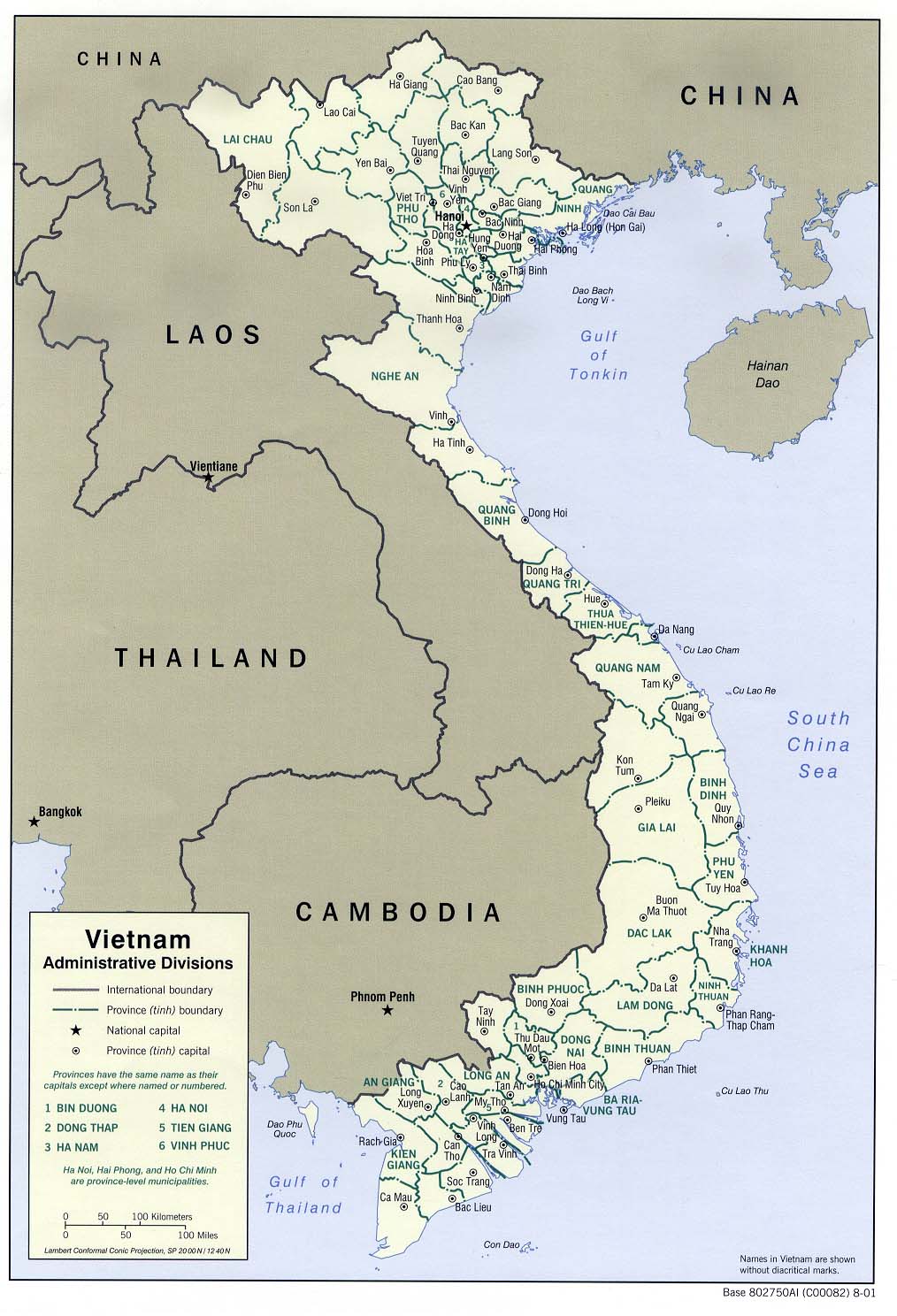
For maps of Viet Nam with provinces, see
<http://www.lib.utexas.edu/maps/middle_east_and_asia/vietnam_admin01.jpg>
and <http://www.angelfire.com/co/hongnam/vnmap.html>.

The HealthMap/ProMED-mail interactive map of Viet Nam can be accessed
at <http://healthmap.org/promed?v=14.9,108.5,5>. This map shows other
outbreaks in Viet Nam and surrounding countries that have been
reported on ProMED-mail and PRO/MBDS. The postings can be directly
accessed through this map. - Mod.YMA]
Rabies in Bali Reflection Siskeswannas Feeble
(more)
Why not, Bali was the tourism region trapped the world that since the colonial Dutch colonisation time was stated as the free area of rabies. This was based on Hondsdolhed Ordonantie (staatblad 1926, No. 451 yunto Stbl 1926 No. 452) that said that several territories karesidenan and the island in the Dutch East Indies (Indonesia) in the period was free rabies. Including among them the territory of Karesidenan Bali. Rabies was the animal illness that was caused by the virus that is Lyssa the virus from the family Rhabdo viridae that was zoonosis with the death rate (case fatality rate) reached 100%, so as rabies was known as the illness that almost always deadly (almost always fatal) when emerging the clinical sign, both to the animal and humankind.
In relation to this case the complexity of the problem zoonosis as in the case of rabies or bird flu, anthrax, Toxoplasmosis, Tuberculosis, Leptospirosis, Brucellosis, and still many others that were other.
Moreover the available illness in Indonesia but had the potential to spread to humankind like Gila cattle (Bovine Spongioform Encepalipathy) depicted why needed the existence of the unification and the efforts co-ordination between the health (medicine), the health of the animal (veterinary medicine) and the health of the community (public health).
The illness capacity to spread exceeded the territory limit and the limit between the species demanded the need of responsibility of the veterinary surgeon's medic of determining the alternative to the best action that must be carried out. Certainty filled the medic's responsibility already clear needed the legality in one framework of the clear and firm law.
Therefore already appropriately at this time the government immediately ratified the BILL (the Bill) Veteriner and immediately bring about in the form of concrete. Considering the problem of the illness in the animal not seldom finished thoughts, time, the power, and the loss ekomomi as far as millions in fact billions rupiah in his handling. Especially zoonosis. Life a risk.
Iwan Berri Prima
Pondok Hatori Desa Cibanteng Kecamatan Ciampea Bogor
berry_vetipb@yahoo.com
081310190820
Penulis adalah Mahasiswa Program Pendidikan Profesi Dokter Hewan (PPDH) Fakultas Kedokteran Hewan IPB Bogor.(msh/msh)
the number of people monitored to 75
04/12/2008
RIVER - the team formed for technician of and Secretariat, Health department State and Municipal of Health Oswaldo the Foundation Cross (Fiocruz) extended for 75 the number of people who are being monitored due to possibility to have had direct contact with fluids and secretions (blood, muco, piss, excrements) of the South African who died in consequence of hemorrhagic fever of cause not identified. Between the people who are being monitored he is one another South African entrepreneur, partner of trip of the deceased, and the doctors and nurses of the hospitals D' Bar; Or and Is Jose had taken care of who it. Second note of the Health department, none of the monitored people presented symptoms that indicate contamination. All pass for preventive clinical monitoramento, with verification of the body temperature two times to the day. Also they are observed the occurrence of other signals or symptoms, as diarréia, migraines, vomit, yellowish skin, calafrios and pain in the throat. The forty days accomplishment was not indicated, therefore the transmission of the illness only occurs after the beginning of the symptoms.
Discarded disgnostic of hepatites and hantavirose
On the basis of resulted preliminary of the examinations that are being carried through in the Fiocruz, they had been discarded, in this thursday, disgnostic of hepatites and hantavirose, according to Health department. Previous evaluation already had discarded affection, malaria and ebola. Other hypotheses, as leptospirose and arenavírus, continue being investigated. The final results of the examinations must leave the next week at the beginning.
(more)
In this thursday, it occurred, in Brasilia, a audioconferência between representatives of the Center of Strategical Information in Monitoring in Health of the hospital and, Health department American Pan Organization of Saúde (OPAS) in Johannesburg, in the South Africa, where the patient was interned for accomplishment of ortopédica surgery. During the audioconferência, the clinical description of the patient was argued. Also it had exchange of information on the four people with arenavírus that they had died in the hospital of Johannesburg and on a fifth patient, a woman, also infectada for arenavírus, but that it survived and that received high recently.
Also in this thursday, the OPAS divulged note validating the joint decision - of the Secretariat and Health department State and Municipal of Health - not to determine forty days for the people who are being monitored. Body of South African is cremado The cremation of the body of the South African, initially foreseen for 16h of this thursday, in the Memorial of the Carmo, the quarter of the Cashew, delayed more than two hours little and had beginning to 18h15. According to Health department, the operation alone could start after the arrival of representative of the Sanitary Monitoring of the State of Rio De Janeiro, that was signed document authorizeing the incineration of the zinc coffin, where was the body.
The cremation has foreseen duration of six hours. After the guiding of the body for the cremation, a team of ten men of the Grouping of Operations with Produtos Perigosos (GOPP), of the Body of Firemen, effected preventive decontamination, with chemical products, in the places for where the coffin passed. The operation lasted 35 minutes.
The Body of Firemen informed that, in this friday, hour not yet divulged, the ballot box with leached ashes will be carried by a particular company to the Palace of the Itamaraty, in Rio De Janeiro, where it will wait the legal proceedings for the transfer until the South Africa. According to Health department, the decision for the cremation, questions of public health, was authorized for the Justice of the State of Rio De Janeiro. However, the body of South African engineer Willian Charles Erasmus was carried from the Nursing home Is Jose for the crematório of the San Francisco Cemetary Xavier, in the Cashew, without authorization of the Secretariat of state of Health.
The transference, in special project of security, would be made by firemen using clothes to the test of contamination. In accordance with the assessorship of the press of the secretariat of Health, representatives of the hospital where the foreigner died will be heard to clarify the reasons of the irregular transport, that was made in the night of the Wednesday for employees of the Saint Casa de Misericórdia.
In note, the Nursing home Is Jose said in this thursday that the removal of the body " carried through for the team of the Saint Casa de Misericórdia it was made in accord with the same norms of security established by the authorities of the scopes municipal, state and federal in the period of permanence of the body in the dependences of the hospital, as well as following the recommendations of the World-wide Organization of the Health for cares of patients with fever suspicion hemorrágica".
Inspectors of the Sanitary Monitoring of the city of the River, who are working in set with the State Secretariat of Health, had arrived to go to the hospital, there but they had been informed that the body of the South African, already he had been transferred. Military policemen had made the security until the moment of the cremation to prevent new irregularities. The unexpected arrival of the body to the crematório changed the routine of the place.
The cremations had arrived to be interrupted during the morning for precaution, since the body of the South African was together with the other bodies and the employees did not have protection to enter in cômodo. At the beginning of the afternoon of this thursday, the Saint Casa de Misericórdia divulged a note where it explains that the body of the entrepreneur was removed to 21h30m of Wednesday obeying all the norms of security established by the Health department. The note says that the employees had used gloves, masks, aprons and caps. Still in accordance with the Casa Saint, the removal was made the order of the direction of the Nursing home Is Jose, since the institution does not have cold storage room to condition the body.
Cause of the death is investigated Five specialists in contagious diseases of the Health department are in the River to investigate the cause of the death of the engineer with the authorities of the city and the State. Samples of blood and the liver of the engineer are analyzed in the Fiocruz, in Manguinhos.
The main suspicion it is contamination for arenavírus, that piss or excrements of a contaminated rat is transmitted by. The Brazilian specialists make three types of examination to confirm what she provoked the hemorrhagic fever in the foreigner. The Brazilian sanitary authorities work with the hypothesis of that the entrepreneur would be infectado with a still unknown type of arenavírus that he caused one I occasion in the Morningside Clinic, in Johannesburg, between September and October, killing four people. It was submitted to a ortopédica operation in this exactly hospital 15 days before embarking for Brazil.
The Strategic role of Animal Quarantine
Indonesia was the archipelagic state that had one million potentials to become developed countries. The number of islands forced Indonesia to continue to carry out the supervision tightly in order to continues to maintain Republic of Indonesia unitary state territorial integrity (NKRI). Of course the existence of the Republic of Indonesia Troops (the TNI) in maintaining the security and cohesiveness of each NKRI territory point absolute was needed. But, the existence of the component that was on duty at the Indonesian territory entrance in preventing all the material circulation being dangerous that threatened the safety and cohesiveness with of the Indonesian community being the same the importance with the TNI existence in maintaining NKRI territorial integrity.
-snip-
The trade in the animal commodity and his product international also could trigger transboundary disease (the illness that was spread from one country to the other country through the trade route) like the foot-and-mouth disease (PMK), mad cattle (BSE), rinderpest, classical swine fever, and bird flu (AI). This risk that happened if the process of the handling in the trade in the animal commodity was not carried out not exactly. If we did not handle this well then instead of the international trade beneficial for us but precisely that happened the threat for this nation.
Multiplier Effect Illness
Hewan Kita was brought face to face in fact that the animal illness had multiplier effect that was wide. Beginning with the loss economically, the health of the community, and the environment, social the culture, and the position of a country opposite the international community. Indonesia has felt the effect from the handling that was inexact in the bird flu resolution (AI). Apart from the Indonesian economic loss also received the sharp focus from the international community resulting from the handling that was inexact in the bird flu resolution. We could see several countries that suffered the economic loss as a result of the illness originated the animal must among them England spend the fund of Rp 93 trillion resulting from foot and mouth disease (the foot-and-mouth disease/PMK). Resulting from the same illness, during 2001 the Brazilian turn suffered the loss of Rp 2.7 trillion and Argentinan Rp 5.4 trillion during 2005. The superpower's country like the United States each year must menggelontorkan money three until six billion American dollar resulting from the animal illness.
(more)
How with Indonesia? We could study many of the cases of the foot-and-mouth disease (PMK) and bird flu. To release Indonesia from PMK was needed by time 100 years and it seems the total loss reached Rp 11 trillion. Now resulting from bird flu Indonesia suffered the loss not less than Rp 4.1 trillion. A figure that was fantastic for a country with the condition for the economy that still unsteadily. That not to mention the loss resulting from the other animal illness that definitely increasingly incriminating the budget of this country. This was very much regretted in the middle of the community that most of his economics was weak and the bad nutrient as well as hunger happened dibeberapa the territory in this country. Definitely this condition will not happen if all these nation components were really serious in overcoming the spreading and the threat of the animal illness. In fact if we could control bird flu and the other animal illness well then we might not menggelontorkan the fund as big as that and definitely will be more beneficial if the fund as big as that could be allocated to for welfare of the Indonesian community. The current for the health of humankind also must receive serious attention. The existence zoonosis (the illness that could be spread from the animal to humankind vice versa) continued to become the world threat.
At this time Indonesia was still occupying the first place of the number of human casualties resulting from bird flu. That not to mention human casualties resulting from zoonosis other like rabies that reached 100 people more each year. If being seen by us the data that was sent by Brown (2004) that for the last two decades 75% new illness (emerging disease) that attacked humankind came from the illness agency that attacked the animal (zoonosis). The available fact forced us must serious handled the originating illness the animal. At this time the threat of the influenza pandemic resulting from unrestrained him bird flu well continued to become the threat for establishment and the existence of humankind in this earth. This condition was certainly very worrying humankind in the world. The world to compete swift with the development of the illness agency from the animal that could threaten the existence of humankind in the world. Moreover at this time several sides that were not responsible for making use of the illness agency from the deadly animal (the example of the Bacillus bacteria anthracis) this as the biological weapon (bioterrorism).
The current size that was produced by this biological weapon again seized attention of the international community.
The effect of the animal illness also evidently touched the social aspect of the culture. The real example was experienced by our nation was in the case of bird flu. We could see the reaction of the Karo community at the time of cluster bird flu in Karo. We could also see the reaction of the Balinese community in responding to the case of bird flu. All of them blew in the social aspect of the culture respectively the area. Now towards the Indonesian position in the eyes of the international community was not that doubted that as a result of being not yet optimal him Indonesia in stifling the spreading of bird flu then Indonesia continued to receive the sharp focus from the international community. Several matters that was explained above was multiplier effect from the animal illness. This effect could be still developing more far and touched to various foundations of the other life if the handling towards the animal illness was not carried out seriously.
The Quarantine Livestock system that delay activity/action of the international trade (international) that was increasingly fast had the potential produced transboundary disease. This could also produce several animal illnesses that exotic in Indonesia. The Avian existence influenza (bird flu) in Indonesia was it was suspected strong as the impact of the negative of the international trade that happened. Learn from this possibility then ought to we tightened and reinforced the guarding against the international trade entrance in Indoensia. This really was realised by developed countries and they really focussed themselves on the supervision action of the area of the border (the entrance) from the entry threat of the illness agency from the animal that could spread the threat for cohesiveness of this country.
So we must reinforce the system of animal quarantine that was assigned in the territory entrance of NKRI. Kalau to be seen by us the available regulation that is No UU 16 in 1992 Tentang Karantina Hewan, Ikan, and plants were stated that one of the aims of animal quarantine was to prevent the entry of the pest and the illness of the quarantine animal from overseas into the Country's Republic of Indonesia territory. As garda foremost in preventing the entry of the illness agency from the animal from the other Country to the NKRI territory then animal quarantine had the very strategic role. The existence of animal quarantine not only was limited prevented the entry of the biological agency being dangerous that was carried by the animal and his product. But, more far was these efforts was aimed to continue to guard all the Indonesian nation components from the agency's biological threat dangerous this.
Saw the available challenge then the available system of animal quarantine must mampu solved the problem kekinian in line with increasingly the speed of the trade between the area and international. Needed by the quarantine system that was strong by being supported by human resources that mumpuni and adequate facilities. Animal quarantine as garda foremost in handling various potential animal commodities brought the illness agency had responsibility that was not easy. Everything of Indonesia had thousands of islands that meaning that the entrance also not a little. This condition was made heavier with various limitations beginning with the insignificance of human resources (human resources), facilities, dan funding.
Saw the role of animal quarantine in preventing the entry of the illness agency from the animal in this country then was not abundant if responsibility that was carried out by animal quarantine was the same the weight with TNI responsibility in maintaining cohesiveness of NKRI. Pendekatan that was done by animal quarantine not only was oriented in the supervision and the inspection to the issuing entrance of the thing (entry-exit point). But, also was oriented in the animal traffic and the animal product intact was based on the available regulation. The security of the NKRI territory from the attack of the illness agency from the animal especially from the other country depended on the achievement of animal quarantine (agricultural quarantine). The noble work at the same time was not easy to be carried out. Needed planning and the strategy that were comprehensive in pacifying the NKRI territory from the threat of the illness agency from the animal.
There were several important points in creating animal quarantine that was strong that is the increase in human resources (human resources) both the quality and the quantity, facilities, and funding, the legislation (the regulation/the legislation), and the international co-operation. The existence of human resources with the adequate quality absolute was needed in creating strong animal quarantine. The increase in the quality of the medical staff (the veterinary surgeon) quarantine and the other component must continue to be carried out. Even so with the existence of facilities and sufficient funding. The rule perkarantinaan also must be relevant with the problem kekinian that was dealt with. The need of the acceleration with the regulation from the other institution including the regional government in order to brings about a system of animal quarantine that could maintain the security of the NKRI territory from the threat of the illness agency from the animal.
Apart from the three matters above then that did not lose important was the work was the same as the international community. The work was the same as the international community enabled us to continue to improve ourselves in order to prepares all the components that were needed in facing the available challenge. Moreover in the increasingly fast international trade era. The four matters above if could be done well then the dream of creating the strong system of animal quarantine and could solve the problem perkarantinaan (the animal) kekinian could be realised. It is hoped!
Drh Agus Jaelani
Kompleks Bandara Sam Ratulangi Manado
ajaelani12@yahoo.com
081316611511
Penulis adalah Calon Medik Veteriner Balai Karantina Pertanian Kelas 1 Manado.(msh/msh)