Thursday, November 12, 2009

Swine flu: One killer virus, three key questions

Published online 11 November 2009 | Nature 462, 154-157 (2009) | doi:10.1038/462154a

Nature reports from three laboratories scrutinizing the pandemic flu virus.
Brendan Maher & Declan Butler

As the world mobilizes against the H1N1 flu pandemic, researchers are working to answer pressing questions about the virus. Brendan Maher visited pathologists at the US Centers for Disease Control and Prevention who are looking at how the virus kills, and a New York laboratory that is testing how it spreads. Declan Butler spent time at a French biosafety level-4 facility where researchers are working out the chances that the pandemic virus will reassort with the H5N1 avian flu virus.

1. How does it kill?

There are five sets of eyepieces on the microscope, and Sherif Zaki is looking down one of them. Looking down the other four are members of the team he leads at the infectious-disease pathology branch at the Centers for Disease Control and Prevention (CDC) in Atlanta, Georgia. Other researchers trained in epidemiology, microbiology and electron microscopy watch a large, flat-screen monitor at the end of the narrow conference room that shows an image projected from the microscope.

Dianna Blau, an epidemiologist, reveals the source of the tissue: an 11-year-old girl who died in September, probably from H1N1 influenza. The team had already detected viral RNA in the girl's samples. But observing the presence of the H1N1 virus, especially in this tissue from deep down in the lungs, provides a more accurate and detailed diagnosis. The tissue seems messy, and is flooded with blue-stained Staphylococcus aureus. Zaki scans back and forth across the slide, seeking the hint of red staining that would indicate the presence of antibodies bound to the H1N1 virus. He finds it on one slide, where a red blob indicates a profusion of virus being released from a rupturing cell. They mark her as positive.

“H1N1 looks like avian flu on steroids.” Sherif Zaki

Zaki's lab holds these 'sign out' meetings every afternoon, examining autopsy and other tissues that have been sent to the CDC from doctors and medical examiners around the world to find, confirm or rule out any number of diseases. Since April, their case load has doubled thanks to H1N1. So far, the group has received samples from more than 300 suspect cases, and it has confirmed swine flu in more than a third of them.

In addition to providing a diagnosis, the group's analyses are helping to build up a picture of how the virus kills. Pathological studies can show what tissues are affected and to what extent, adding detail to the worldwide monitoring and surveillance efforts.

The profile emerging is of a distinctive virus. Although seasonal flu tends to infect just the cells high in the upper airway, H1N1 penetrates down into the terminal air sacs called alveoli. "This is not an area of the lung where you would usually see seasonal flu," Zaki says. He has seen such behaviour before, though — in the few samples of lung tissue he has examined from humans killed by the H5N1 avian flu virus. But the virus is much more prevalent in the tissues from the severe H1N1 cases he has examined — "like avian flu on steroids" as Zaki puts it.

Zaki says that his observations fit well with recent research looking at the mechanism of infection. A group led by Mikhail Matrosovich at Philipps University Marburg in Germany and Ten Feizi at Imperial College London studied sialyl glycans, glycoproteins that the flu virus binds to in order to gain entry to human cells1. Although seasonal strains of H1N1 bind mostly to versions of the glycoproteins known as α2-6, the researchers found that the new pandemic H1N1 can also bind to a version called α2-3, which is found in greater proportion in the lower respiratory tract.

Co-infection is common with pandemic H1N1, at least in those who have died. Zaki's group has observed infection with bacteria such as S. aureus or Streptococcus pneumoniae in about a third of the fatal swine-flu cases it has examined. In the rest, the virus seems to be lethal on its own. Zaki slots onto the microscope stage a slide from a 38-year-old male who died without bacterial co-infection. This one is filled with the red staining; also the walls of the alveoli are ruptured and blood cells and fluid fill the spaces normally reserved for gas exchange. Scar-like pink ribbons, called hyaline membranes, arc through the tissue. Pathologists call this state 'diffuse alveolar damage', and it tells them that the man had respiratory distress syndrome. "It's very difficult to treat a patient once they get to this state," Zaki says. He points out that the man was obese and had a history of hypertension and heart problems. Some 90% of the cases his team has reviewed have had some underlying medical condition.

Zaki says that they plan to publish some of their observations soon, and he has been sharing them with others at the CDC and with the public-health community at large. Although pathology can't predict what the virus will do in the future, it can help to identify those most at risk of severe disease. "We've really learned a lot with the lab pathology," says Anne Schuchat, director of the CDC's National Center for Immunization and Respiratory Diseases. "Both the prominence of the pneumonia in some infections and bacterial co-infection have important clinical implications," she says, explaining that pathology results have led the CDC to recommend pneumococcal vaccination for people in at-risk groups.

At the end of the sign-out meeting, Zaki walks back to his office through a quiet lab; the technicians have gone home for the day and the machines used to prepare and stain slides are silent. Six fresh case studies in purple folders sit in a neat row along one of the lab benches ready for processing and examination. They contain slides or tissue embedded in paraffin: one still has lumps of formalin-soaked flesh sitting in a plastic specimen jar.

As the flu season ramps up, Zaki says, he suspects the number of flu cases will increase dramatically. Still, his lab sees only a small slice of what's happening worldwide. "We're looking at the tip of the iceberg in terms of these cases," he says. It's a grim job, reading the tales of the dead, but he adds "that information is important for the living".

Brendan Maher

2. How does it spread?

In a cramped locker room high above the streets of upper Manhattan, laboratory personnel take a visiting journalist into the emerging pathogens facility, an enhanced biosafety level 3 (BSL-3) laboratory on the New York campus of Mount Sinai School of Medicine.

The suiting-up procedure is complicated. Rubber-soled booties must be tucked under a jumpsuit to ensure that spilled fluids don't drip into them. Purple latex gloves are layered underneath green ones; the different colours are used to ensure that rips in the outer layer are visible. Black N95 face masks pinch off the nostrils, forcing the wearer to breathe noisily through his or her mouth. The staff call them Darth Vader masks. They also wear papery mesh scrubs and white 'bunny suit' coveralls made from the material used to insulate houses. Biosafety officer Philip Hauck quotes Dante as he prepares to go in: "Abandon all hope ye who enter here."

In another preparatory room, they add heavy, belted, battery-powered air filters with a hose that hooks into the back of a white head-covering. Once it's adjusted, air begins rushing up over the face, puffing up the suit. The positive pressure in the suit, combined with the negative air pressure in the lab, ensures that the flow of air will carry any airborne pathogens away from the body.

This is the procedure that researchers at Mount Sinai go through every day to carry out their animal studies on deadly pathogens. Since May, pandemic H1N1 has been one of those pathogens. As the pandemic was emerging, John Steel and Anice Lowen secured strains of novel H1N1 from California and the Netherlands, and made plans to include them in their work modelling the transmission of influenza in guinea pigs. BSL-3 facilities are not required to work with H1N1, but Steel and Lowen's institutional review boards wanted the work to be carried out under the most stringent conditions on site.

Many labs use ferrets to model the transmission and pathology of human viruses, but the animals can be difficult to work with. Peter Palese, the head of microbiology at Mount Sinai, came up with the idea to work with guinea pigs a few years ago after reading an article published after the 1918 influenza pandemic, in which researchers in New Mexico noted that the infection had killed off a number of laboratory guinea pigs2. He convinced Lowen and Steel, assistant professors in his lab, to test whether the creatures would transmit human influenza. They did. In 2006, the group showed that the guinea pigs pass the virus between them with about the same efficiency as humans3, and the researchers still use them as a model of transmission even though their animals, purchased from a lab supplier, do not show symptoms or die from the disease.

The first thing the researchers did with the samples of pandemic H1N1 was to compare its transmissibility with that of seasonal flu. They squirted about 10,000 infectious H1N1 particles up the noses of four guinea pigs and, a day later, placed these animals in cages next to uninfected animals, separated by wire-mesh walls that allow respiratory droplets to pass through. Within five days all the exposed animals tested positive for the virus. The team's paper, published last month in the Journal of Virology, suggests that the H1N1 swine flu virus transmits just as efficiently as seasonal flu4. This is contrary to some work on transmission done at the start of the pandemic5 but mirrors real-world data showing that H1N1 spreads rapidly. "The pandemic sort of scooped us," says Lowen. Palese's group also found that previous exposure to the H1N1 and H3N2 subtypes of seasonal influenza limits the ability of exposed animals to become infected with the pandemic H1N1, which supports the idea that a seasonal flu infection or vaccine might offer some cross-protection against swine flu.

Inside the facility are the huge steel ferret cages that Steel and Lowen have adapted for their guinea-pig work so that two animals can fit inside each. They are now planning new experiments, hoping to find the sequences within the genome that enable the virus to transmit so well between humans compared with other swine-adapted influenza strains. They may create reassortments of the virus and then test how well they are transmitted by the guinea pigs. The results might aid in surveillance efforts aimed at identifying other strains from animals that could make the leap to humans.

Everything that goes into the BSL-3 lab must be decontaminated before coming out. This involves spraying down the bodysuit with ethanol, carefully peeling it off and then leaving the facility by way of a shower room. A pen and notepad won't survive the caustic chemical dunk by the exit, so the pages are scanned and put onto a CD that can be sprayed down.

Outside again on the Manhattan streets, H1N1 could be encountered in any cough or sneeze. Without all the protective gear, one feels rather vulnerable.

Brendan Maher

3. What could it turn into?

A deadly line-up of viruses is locked up in the computer-controlled safes at the Jean Mérieux/INSERM biosecurity level four (BSL-4) facility in Lyon, France, including Ebola, Nipah, Lassa, Hendra and Marburg. And in the next few weeks, scientists working there are planning to manufacture a new resident. They hope to test whether the highly transmissible pandemic H1N1 virus could reassort with its deadlier cousin, the H5N1 avian flu, to make a virus with the worst properties of both.

Classed as a national high-security facility, the laboratory is a three-storey shoebox made from armoured glass, perched above a biology research centre of INSERM, the national biomedical agency. The edifice is built to withstand earthquakes, bullets and explosives. It is also smack in the city centre, its entrance just metres from mothers pushing prams along the pavement on avenue Tony Garnier.
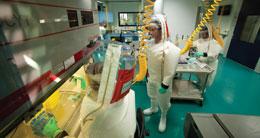
Suited up: extensive precautionary measures have to be followed in biosafety level-4 labs.Suited up: extensive precautionary measures have to be followed in biosafety level-4 labs.P. LATRON/INSERM

The lab itself is surrounded by empty corridors and a spartan decor of steel staircases, trusses, raised walkways and ventilation pipes. The air hums from the air-ultrafiltration and other support machinery that take up entire floors above and below. Under negative air pressure to stop viruses escaping in the event of a breach, the lab is split into three zones, with the airstream flowing towards the 'hottest' exposure risk zone, the animal house at the back.

When the current H1N1 pandemic began in April, priority lab time here was allocated to Bruno Lina, a virologist and flu researcher at the CNRS, France's basic-research agency, who works at the University of Claude Bernard Lyon-1. Pandemic H1N1 influenza is not itself a BSL-4 agent — a BSL-2 facility is adequate. But in France, the health ministry classes viral reassortment experiments of the sort Lina is performing as requiring BSL-4 precautions.

The ability to predict which reassortments might take place, and what type of flu viruses might result, could be key to predicting the behaviour of this and future pandemics. The eight genes in the influenza virus's segmented genome are easily swapped between strains. But to be viable, new gene combinations must also be able to work together to package themselves into a virus particle. Viruses within a subtype tend to reassort with one another more easily and generate more viable reassortants than do those from different subtypes.

Over the summer, Lina's team has been using the BSL-4 facility to investigate the likelihood that pandemic H1N1 will acquire resistance to the front-line antiviral drug oseltamivir (Tamiflu) through reassortment, and how easily these reassortants might spread. Resistance can emerge by spontaneous mutation, but given that seasonal H1N1 is already resistant to the drug and spreads easily, reassortment is perhaps the most likely way that pandemic H1N1 will acquire resistance — especially as seasonal H1NI and pandemic H1N1 are the same subtype. Since the start of the pandemic, Tamiflu-resistant strains have sporadically appeared in several countries but none has yet gained a foothold. That they haven't arisen more often or spread more easily may be because there is little seasonal H1N1 circulating, as pandemic H1N1 is outcompeting it — a large number of co-infections are needed for transmissible reassortants to arise.

In his work, Lina co-cultured the two H1N1 viruses in a cell line. He is now testing how pathogenic the reassortants are in mice, before using ferrets to test their capacity to spread. The biggest hazard that the scientists face in the lab is a bite or a scratch from an infected animal, so all manipulations are done on animals that have been anaesthetized remotely.

Lina is also preparing to submit a protocol to the facility's scientific board seeking the green light to try to reassort pandemic H1N1 and the H5N1 avian flu virus. "It's controversial research, but it is basic science that needs to be done," says Lina. H5N1 has killed more than half of the people it has infected since it resurged in 2003, but has rarely spread from one person to another. H1N1, on the other hand, seems to be as transmissible as seasonal flu, but mild in most people, if severe in some. The aim of Lina's proposal is to find out the probability of a reassortant arising that combines the lethality of H5N1 with the transmissibility of H1N1.

“It's controversial research, but it is basic science that needs to be done.” Bruno Lina

In particular, Lina is searching for putative molecular controls of the virus's segmented genome that may determine why some reassortants can package the virus and others can't. s"We don't know which regions in H5N1 are responsible for that control," says Lina. That could have benefits for disease surveillance, he says. If researchers know the key genetic regions that facilitate reassortment, surveillance efforts could watch out for H5N1 or H1N1 viruses with changes in those regions, ones that might be on the verge of dangerous reassortments.

Lina will use reverse genetics to generate a soup of reassortants, test whether any are viable, and if they are, assess their virulence and transmissibility. Because H1N1 and H5N1 are different subtypes, Lina does not expect them to swap genes easily. In 2005, he tried to reassort H5N1 with seasonal H1N1 and H3N2 viruses, without success. "After a year we only had three reassortants, and none was fit," recalls Lina, "they just don't reassort well."

The experiments that Lina's team is carrying out in the BSL-4 lab aren't technically novel or difficult in themselves. But the encumbrance of the safety procedures for getting in and out of the high-security lab make even the most straightforward procedures complicated, says Lina. Looking through the bulletproof window, one can see why. As the researchers move around the lab, they connect and disconnect their blindingly white spacesuits from some 60 yellow air hoses dangling from the ceiling. The hands of the researchers snipping away at tissue samples are wrapped in multiple layers of gloves to avoid accidental pricks. "It's like trying to do surgery wearing boxing gloves," says Hervé Raoul, director of the facility.

Before researchers can even begin to work in the lab, they must pass a three-week training course. It's only after a further 200 hours of practice that they are given any real autonomy in the lab, and they are never allowed inside alone. Users are limited to working a maximum of one four-hour shift a day, so that they are less likely to make mistakes. They are also encouraged to share any concerns about the behaviour of colleagues, or whether they themselves are going through a difficult patch, which might cause distraction and accidents.

Before Lina's experiments get approved, the facility's external scientific board will need to be convinced of the public-health justification, that the science is top-notch and that the experiments can be done safely, says Raoul. It will also need to be approved by government regulatory agencies. If all goes well, he could have his authorization in weeks, Lina says.

"Compared to the big guns in flu research, I'm a little guy," says Lina. "But having access on my doorstep to one of the rare BSL-4 facilities in the world with an animal house is a big advantage."

Declan Butler

  • References

    1. Childs, R. A. et al. Nature Biotechnol. 27, 797-799 (2009). | Article
    2. Lamb, F. H. & Brannin, E. B. J. Am. Med. Assoc. 72, 1056-1062 (1919).
    3. Lowen, A. C., Mubareka, S., Tumpey, T. M., García-Sastre, A. & Palese, P. Proc. Natl Acad. Sci. USA 103, 9988-9992 (2006). | Article | PubMed | ChemPort |
    4. Steel, J. et al. J. Virol. doi:10.1128/JVI.01732-09 (2009).
    5. Maines, T. R. et al. Science 325, 484-487 (2009). | PubMed | ChemPort |

Wednesday, November 11, 2009

Experts warn of possible A/H1N1 mutation

Video (in English) at the link.


2009-11-11 13:25 BJT

Medical experts are warning that the A/H1N1 flu has entered a period of high frequency and easy transmission. And with fresh cases of pigs infected by the virus in Hong Kong and Taiwan, experts say the possibility that the virus will mutate is growing.

Recent monitoring has found several cases of pigs, cats and dogs infected by the human A/H1N1 flu virus. Experts now fear that close contact between people and animals will increase the danger of mutation. China's Ministry of Health reported 30 fatal cases on the mainland as of Monday, out of nearly 60 thousand confirmed cases. It said the increase in infections will inevitably result in additional severe cases. Experts call for a timely response each time a case is confirmed, to prevent the illness from worsening.

Dr. Zhong Nanshan, head of Chinese Medical Association, said, "Because when the virus harms the lungs, there is a high possibility of breathing difficulty. It is different from the usual pneumonia. And there will be great difficulty treating such patients, even though they are young and healthy. The reason for this is unclear yet, but what we can do is get vaccinated, and go to the hospital as soon as possible when suffering from a continuous fever. "
hat-tip Tonka

H1N1 Cases: Healthy to Death's Door in One Week

In 1 Percent of Swine Flu Cases, Doctors Say Virus Attacks Lungs So Viciously That Other Organs Can Fail

By CHRIS BURY and TALESHA REYNOLDS
Nov. 11, 2009

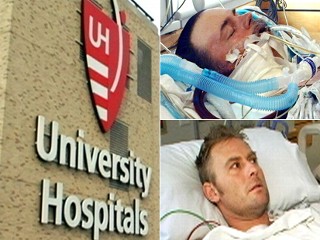
On one floor of the University Hospital Case Medical Center in Cleveland, the H1N1 virus is showing just how random, powerful and destructive it can be, even for healthy adults in the prime of their lives.

PHOTO
Robert Bradbury, 34, and Walter Savitts, 44, were airlifted from smaller hospitals to University Hospital Case Medical Center in Cleveland, where they arrived in critical condition, barely able to breathe, due to severe cases of the H1N1 virus.
(ABC News)

Walter Savitts, 44, depends on a machine for every breath. His wife, Margaret, is constantly at his side. Nearly three weeks ago, he came down with what seemed an ordinary case of the flu.

"I just figured you're going to get the 24 hour bug or something like that. I never thought that it would turn out to be something like this," Margaret said.

The truck driver had been in excellent health until that October morning.

"Just a fever, small cough. Not a big thing," Margaret told "Nightline." "By Monday, he started saying his chest was hurting so he went to the emergency room. ... They told him he had the flu and sent him home. ... By Thursday, he was in so much pain at 3 a.m. that he went back to the hospital and they said that he had full flown pneumonia ...and by 2 a.m. Monday morning he was in full respiratory failure."

Watch the full story on "Nightline" Wednesday at 11:35 p.m. ET

In the next hospital room, 34-year-old Robert Bradbury floated in and out of consciousness. Except for an asthma attack six years ago, he, too, had been healthy and strong before the virus took hold.

"We are young people, young healthy people, athletic," said Robert's wife, Candice Murton-Bradbury. "He plays volleyball. We are out a lot, we walk, and he's a nonsmoker, you know, all the things that they tell you to take care of yourself."

Slightly more than three weeks ago, after a night of celebrating with his wife and colleagues, the Ohio restaurant manager fell asleep at work.

"I guess he lay down at work and never got up again," Murton-Bradbury said. "And was just very incoherent and not with it."

Co-workers took Bradbury to an emergency room the morning of Tuesday, Oct. 20. Due to the severity of his illness, doctors decided to send him to Case Medical Center for more advanced treatment.

Doctor: 'He Was Pretty Much Dead When He Came In'

Bradbury and Savitts were airlifted from smaller hospitals to Case Medical Center, where they arrived in critical condition, barely able to breathe.

Dr. Arie Blitz, a surgeon and medical professor, treated both men. He said when Bradbury arrived, his vital organs were failing.

"He was pretty much dead when he came in," Blitz said. "He developed something that I have never seen before in medicine ... four things at once. ... He had H1N1 flu. He developed a big pulmonary embolism, which is a clot that was sent off to the lung. He had a heart attack, and he had a stroke all at the same time."

Blitz told Bradbury's wife that her husband had a 1 percent chance of survival. "They pretty much informed all of us that he wasn't going to survive," Murton-Bradbury said. "One of the vascular surgeons came out and gave me his wedding ring, which was terrible, to say the least."

Savitts wasn't doing much better. His lungs were so badly damaged, according to Blitz, that it was as if they'd been torn to pieces. Both men were beyond the help of ventilators, so doctors performed emergency surgery, called extracorporeal membrane oxygenation, or ECMO.

"The goal of ECMO is to do two things. One is to rest the lungs so we can let it repair itself and two, provide the oxygen needs of the body and get rid of the carbon dioxide waste product of the body," Blitz said.

ECMO has become a vital tool in the battle to save critically-ill flu patients when ventilators alone can't help. Blitz has used it on only his most dire cases.

"They were dying, they were all on death's doorstep, would not have survived no matter what," he said. "Some of these patients would not be around today without that technology."

In some cases, ventilators alone can't help patients breathe. Doctors say that ECMO is needed in about a third of the most serious H1N1 cases. At first, the patients must be induced into a coma to let the body rest and the lungs recover.

Strain on Hospital Staff

Patients like Savitts require round the clock nursing care. In his case, the nurse is ex-Marine Madison Edge, who Savitt's wife Margaret calls her "partner in crime."

"I've been doing this nine years, and I've never seen an influx like this year," Edge said. "I've never seen a flu season like this one here."

The flu is straining the hospital staff, with as much as 20 percent of the nurses out sick here. Pregnant doctors and nurses, those most vulnerable to the virus, have been reassigned. To protect themselves and the patients, the staff must constantly don sterile masks and gowns.

Registered nurse Molly Zerbini takes care of infected children in the pediatric intensive care unit.

"These masks are not the most comfortable thing ever. They're very hot, they're very sweaty, but to protect ourselves and [avoid] transmittal to, particularly, other kids, is priority, so we're dealing with the discomfort of them," Zerbini said.

Influx in Adult Cases of H1N1

At first, in mid-October, the emergency room at Case Medical Center, like others across the country, was flooded with infected children. But now, those pediatric cases have tapered off and the hospital is seeing an increase in the number of adults who have the virus.

"H1N1 for most patients is a relatively benign disease and doesn't progress. But a small percentage of patients can have very, very severe disease and can die from this," Blitz said. "The unfortunate thing about it is that it's not in patients that we can predict with any reliability who gets really sick from it. The ones that we've been seeing here are quite young, in their 30s and 40s, and otherwise very healthy and previously healthy, who come down with H1N1, and within a week's time are on death's door."

Most recover quickly, but experts estimate that in 1 percent of H1N1 cases, the virus attacks the lungs so viciously that vital organs are robbed of oxygen.

"Almost every patient that we have put on artificial support has had not only failed lungs but also failed livers, failed kidneys and even strokes and heart attacks," Blitz said.

Next Step: Recovery, Prayer

Walter Savitts is fortunate that only his lungs were damaged. But nine days after his emergency surgery, he remains in a coma, unable to breathe on his own.

"It gets hard. Some days you just want to cry and cry, but I've got to keep telling myself that he's doing well and it could have turned out a lot worse," Margaret Savitts said.

Blitz said that Savitts' prognosis is good. He estimated a 75 percent chance of survival.

"I think when he came in, without having ECMO, he would have died within 24 hours," Blitz said.

Next door, Bradbury emerged from a deep, induced slumber two weeks after doctors told his wife that he had only a one in a hundred chance to make it.

"He looked at me and made real eye contact, and then the look on his face was, first, awe and then it was relief and he slid over in the bed and put his head against my head," she told "Nightline." "That was the day that I knew that he was going to be OK."

Not entirely. A kidney failure has left her husband on dialysis, but he is grateful to be alive.

"I can guarantee they saved my life here. If it wasn't for them, I wouldn't be here right now. That's for sure," Bradbury said.

To the Savitts family in the room next door, Bradbury's case is an inspiration.

"I had a pretty slim chance at survival there," Bradbury said. "I wasn't really supposed to make it. But I guess ... you believe in God now."

On Monday night, Bradbury, his wife and mother prepared for his move out of surgical intensive care to another ward of the hospital. That same night, Savitts suffered a setback: attempts to wean him off mechanical breathing faltered.

In one room, a man fighting for his survival. In the next, another man on the path to recovery. Both struck down, in their prime years, by a fast and furious virus that works in ways so random that no one fully understands it.

Reuters: New U.S. swine flu death estimates will be guess

Wed Nov 11, 2009 6:57pm EST
By Maggie Fox, Health and Science Editor - Analysis

WASHINGTON (Reuters) - U.S. health officials are due to release new estimates of deaths from swine flu on Thursday, but the numbers will be just that -- a rough estimate.

The U.S. Centers for Disease Control and Prevention and the World Health Organization stopped trying to count actual cases months ago, once it became clear that H1N1 was a pandemic that would infect millions.

There are nowhere near enough diagnostic tests to give to everyone with flu-like symptoms to see if they really have swine flu, and autopsies have shown that some people who have died had H1N1 and no one even knew it.

So the death figures will be based on models, calculated by looking intensively at small groups of people, gathering data on overall reports of sickness and death, and reconciling the two.

This is also what happens every year with seasonal influenza, which WHO says kills 250,000 to 500,000 people a year globally and which CDC says kills 36,000 Americans in an average year.

Will this pandemic kill even more?

Not necessarily. Seasonal flu attacks about 20 percent of the population in an average year but it is the elderly who are the most likely to die. These patients often have other conditions and a flu infection can be the last straw that kills them.

H1N1 is hitting a younger population -- adults in their 20s and 30s and children. The latest counts from CDC showed that 1,000 have died so far, including 129 children.

The global count is more than 6,000, according to WHO.

It is possible that these younger patients may be more likely to survive their bout of flu, even if they have chronic conditions.

Doctors are comparing information about who is the most likely to die.

MEXICAN STUDY

A study in The Lancet medical journal released late on Wednesday shows that in Mexico, where the new flu appears to have spread first last March, young people were the most likely to be infected but elderly were most likely to die.

This study matches one published last week in the Journal of the American Medical Association that showed 11 percent of Californians hospitalized for H1N1 died, but among people 50 and older, 18 to 20 percent who went to a hospital died.

A CDC estimate released last month suggested that up to 20,000 people were hospitalized with H1N1 through July and that 6 percent of hospitalized patients died, or about 1,300 people.

Seasonal flu has a death rate of less than 0.1 percent. The worst pandemic, such as the influenza pandemic of 1918, had a mortality rate of 2 percent or more.

The Mexican study also found that infants and people aged 39 years and under were the most likely to get infected, but that far fewer than 1 percent of these patients died.

Ten percent of patients over 70 who were treated in clinics died, they found.

They found that 4.5 percent of patients aged 50 to 59 died, but just 2.7 percent of those in their 40s and 2 percent of patients in their 30s.

These were all people who attended clinics that were part of the Mexican Institute for Social Security network, the Institute's Victor Borja-Aburto and colleagues reported, so milder cases for which patients did not seek treatment were not included in the analysis.

Mexicans who had been vaccinated for seasonal influenza had a 35 percent lower risk of getting H1N1, even though the seasonal flu vaccine offers no protection against the new virus.

Every day of delay in hospital admission after the fourth day of illness raised the risk of death by almost 20 percent, Borja-Aburto's team found.

The study shows hard it is to get a grip on flu deaths, as doctors cannot assess or count people who do not show up for treatment.

And numbers take months to collect. The latest Mexican data includes cases from April to July.

(Editing by Philip Barbara)

AP: CDC now says 4,000 swine flu deaths in US

ATLANTA — Federal health officials now say that 4,000 or more Americans likely have died from swine flu — about four times the estimate they've been using.

The new, higher figure was first reported by The New York Times. It includes deaths caused by complications related to swine flu, including pneumonia and bacterial infections. Until now, the Centers for Disease Control and Prevention had conservatively put the U.S. swine flu death count at more than 1,000. Officials said this week they're working on an even more accurate calculation.

The CDC says "many millions" of Americans have caught the pandemic flu virus since it first appeared in April.

New England Journal of Medicine: Emergence of Oseltamivir-Resistant Pandemic H1N1 Virus during Prophylaxis

Correspondence
Published at www.nejm.org November 11, 2009 (10.1056/NEJMc0910060)


To the Editor:
Neuraminidase inhibitors (oseltamivir and zanamivir) are recommended for treatment of severe illness caused by the 2009 pandemic influenza A (H1N1) virus, and their use has also been advocated for postexposure prophylaxis in high-risk persons.1 We report the emergence of an oseltamivir-resistant virus in a familial cluster of infections with the 2009 H1N1 virus.

In a 13-year-old boy with asthma, infection with the 2009 H1N1 virus developed and was confirmed by reverse-transcriptase polymerase-chain-reaction (RT-PCR) testing of a nasopharyngeal aspirate. Administration of oseltamivir (60 mg twice a day for 5 days for this boy who weighed 32 kg) was begun, and the patient was discharged home the same day. Simultaneous with treatment of the index patient, postexposure prophylaxis with oseltamivir (75 mg once a day for 10 days) was prescribed to all household contacts (the boy's 59-year-old father, who had chronic obstructive pulmonary disease and was taking prednisone at a dose of 5 mg daily; 50-year-old mother; and 15-year-old and 18-year-old sisters). Approximately 24 hours after oseltamivir prophylaxis was begun, influenza-like symptoms developed in the father (Figure 1). On day 8 of oseltamivir prophylaxis, the father consulted his general practitioner because of persistent cough. A nasopharyngeal aspirate collected at that time was positive for the 2009 H1N1 virus, according to RT-PCR testing and culture. The father had an uneventful clinical course, and a nasopharyngeal aspirate sampled at the end of his illness was negative for the 2009 H1N1 virus. Influenza-like symptoms did not develop in any other household contacts.

Figure 1
View larger version (38K):
[in this window]
[in a new window]
Get Slide
Figure 1. Symptoms, Antiviral Therapy, and Virologic Results in the Index Patient and His Father.

Timelines are shown for the index patient (the son), who was infected with a wild-type strain of 2009 H1N1 virus, and his father, who was infected with a H275Y mutant strain of 2009 H1N1 virus. NA denotes not applicable, ND not done, R resistant, RT-PCR reverse-transcriptase polymerase chain reaction, S susceptible, + positive, and – negative.


The 2009 H1N1 viral isolate collected from the index patient before oseltamivir therapy was susceptible to oseltamivir (50% inhibitory concentration, 0.27 nM) and zanamivir (50% inhibitory concentration, 0.18 nM), whereas the father's 2009 H1N1 viral isolate was resistant to oseltamivir (50% inhibitory concentration, >400 nM) but susceptible to zanamivir (50% inhibitory concentration, 0.12 nM). Complete 2009 H1N1 virus genomes of the father's virus (GenBank accession number, FN434454 [GenBank] ) differed from the index patient's virus (GenBank accession number, FN434445 [GenBank] ) by only one substitution (H275Y) in the neuraminidase protein. The role of the H275Y substitution was assessed by generating recombinant neuraminidase proteins.2 The mutant neuraminidase protein was more resistant to oseltamivir than was the wild-type protein by a factor of more than 400, confirming the phenotypic results.

Our results indicate that the same neuraminidase mutation (H275Y) is associated with oseltamivir resistance not only in seasonal H1N13 and avian H5N14 viruses but now also in 2009 pandemic H1N1 strains. We hypothesize that the presence of subtherapeutic levels of oseltamivir at a time when viral replication had already begun was an important factor that led to the emergence of the resistant virus in the father of our index patient. Other oseltamivir-resistant strains of 2009 H1N1 virus detected during postexposure prophylaxis have been reported to the World Health Organization.5

These observations support the need for limiting the indications for postexposure prophylaxis. It also seems reasonable to rapidly convert prophylactic (once daily) regimens to therapeutic (twice daily) regimens as soon as influenza-like symptoms develop in a patient receiving prophylactic treatment. Monitoring for the H275Y mutation during outbreaks of 2009 H1N1 virus is important in order to rapidly identify transmission events that could lead to large-scale dissemination of an oseltamivir-resistant 2009 H1N1 virus, similar to what occurred with recent H1N1 virus seasonal strains.3


Mariana Baz, M.Sc.
Yacine Abed, Ph.D.
Jesse Papenburg, M.D.
Xavier Bouhy, B.Sc.
Marie-Ève Hamelin, Ph.D.
Guy Boivin, M.D.
Centre Hospitalier Universitaire de Québec
Quebec, QC, Canada
guy.boivin@crchul.ulaval.ca

Financial and other disclosures provided by the authors are available with the full text of this letter at NEJM.org.

This letter (10.1056/NEJMc0910060) was published on November 11, 2009, at NEJM.org.

References

  1. Updated interim recommendations for the use of antiviral medications in the treatment and prevention of influenza for the 2009-2010 season. Atlanta: Centers for Disease Control and Prevention. (Accessed November 9, 2009, at http://www.cdc.gov/h1n1flu/recommendations.htm.)
  2. Abed Y, Goyette N, Boivin G. A reverse genetics study of resistance to neuraminidase inhibitors in an influenza A/H1N1 virus. Antivir Ther 2004;9:577-581. [Web of Science][Medline]
  3. Dharan NJ, Gubareva LV, Meyer JJ, et al. Infections with oseltamivir-resistant influenza A(H1N1) virus in the United States. JAMA 2009;301:1034-1041. [Free Full Text]
  4. de Jong MD, Tran TT, Truong HK, et al. Oseltamivir resistance during treatment of influenza A (H5N1) infection. N Engl J Med 2005;353:2667-2672. [Free Full Text]
  5. Antiviral use and the risk of drug resistance: pandemic (H1N1) 2009 briefing note 12. Geneva: World Health Organization, September 25, 2009. (Accessed November 9, 2009, at http://www.who.int/csr/disease/swineflu/notes/h1n1_antiviral_use_20090925/en/index.html.)

Recalculating the Tally in Swine Flu Deaths

Published: November 10, 2009
About 4,000 Americans — rather than about 1,200 — have died of swine flu since the disease emerged in April, according to new figures being calculated by epidemiologists for the Centers for Disease Control and Prevention.

The larger number of deaths does not mean the virus is more dangerous. Rather, it is a new estimate made by combining deaths from laboratory-confirmed cases of the flu and deaths that appear to be brought on by flu, even though the patient may have ultimately died of bacterial pneumonia, other infections or organ failure.

The new estimate of deaths — actually a range both larger and smaller than 4,000 — will not be released until sometime next week because the centers’ consultants are still looking over the figures, said Glen Nowak, a C.D.C. spokesman.

The new estimate will be a more accurate comparison to the 36,000 deaths from seasonal flu each year, he said. That estimate is also based on confirmed cases as well as hospital reports of people who appear to have died after a bout of flu. Over 90 percent of seasonal flu victims are over 65, and many are bedridden or in nursing homes or have serious medical problems like cancer or heart disease that the flu worsens.

The new estimate “does sound much more reasonable,” said Ira M. Longini Jr., a flu epidemiologist at the University of Washington. “It doesn’t surprise me that it’s higher.”

Michael T. Osterholm, director of the Center for Infectious Disease Research and Policy at the University of Minnesota, said the new estimate was more accurate “but doesn’t change the decisions you’d make from a public health perspective.”

“If it was 40,000 deaths rather than 4,000, that would be different,” Dr. Osterholm said.

A much higher death rate would mean more drastic measures to keep people apart and could mean, for example, adding immune-boosting adjuvants to the vaccine so more people could get it.

Both Dr. Osterholm and Dr. Longini said the new figure does not suggest that the epidemic will eventually kill as many as 90,000 Americans, as was envisioned in one forecast widely publicized in August in a report issued by the President’s Council of Advisers on Science and Technology. That report posited a range of 30,000 to 90,000 deaths.

Dr. Longini said he thought deaths were likely to be in the 30,000-to-40,000 range, and Dr. Osterholm said they would “have a long way to go to even get there.”

The vaccine, Dr. Longini said, should also cut the death rate. About 10 million new doses are shipped each week.

Swine Flu Deaths in Europe Doubling Weekly, Health Agency Says

By Andrea Gerlin

Nov. 11 (Bloomberg) -- Swine flu deaths in Europe doubled in three of the last four weeks, the European Centre for Disease Prevention and Control said.

Eighty-four people in 31 European Union and European Free Trade Association countries died from swine flu last week, compared with 43 the week before, Stockholm-based ECDC said in a bulletin on its Web site. Two weeks ago, 49 people died, up from 24 and 12 the previous weeks, the agency said.

We are globally entering the acceleration phase” of the pandemic, Denis Coulombier, head of the ECDC’s unit of preparedness and response, said in a telephone interview late yesterday. “We are heading toward the peak for sure.”

The region’s swine flu outbreak has been most severe in northern countries such as Ireland, Iceland and the Ural region of Russia, according to the World Health Organization’s regional office in Copenhagen. Norway, Sweden and the Netherlands are also experiencing significant levels of the illness, the WHO said in its Nov. 6 weekly report.

A total of 414 people in Europe have died from swine flu since the outbreak began in Mexico and the U.S. in April, ECDC said. The figure includes 155 deaths in the U.K., 73 in Spain, 31 in Italy and 30 in France since the beginning of the pandemic.

Almost 80 percent of all swine flu cases in Europe have occurred in people under 30 years of age, according to a risk assessment published by ECDC on Nov. 6.

Young People

“In the acceleration phase, it’s not a surprise that the younger ones are the ones who are most contributing to the spread,” Coulombier said. “It doesn’t mean at the end of the wave you will have the same pattern.”

ECDC was established five years ago by the European Union to assist its member states in responding to communicable diseases. Its statistics are probably “gross underestimates” because health-care systems, laboratory testing, surveillance and definitions used to identify cases vary across Europe and affect reporting, the agency said.

The Geneva-based WHO estimated on Nov. 6 that 482,300 people worldwide have been sickened by the H1N1 virus that causes swine flu and 6,000 have died.

Russia has confirmed 4,560 cases of the disease, almost 4,000 of them since Oct. 6, the state public health service Rospotrebnadzor said on Nov. 6. Nineteen people aged 20 years to 53 years had died as of Nov. 2, the majority of them from pneumonia after failing to seek medical attention, the agency said.

Cold Weather

Cold weather and humidity have spurred Russia’s swine flu outbreak, said Oleg Kiselev, head of the Russian Academy of Sciences’ Influenza Institute in St. Petersburg. The pandemic is expected to peak in the country in December, Kiselev said.

“We are planning to vaccinate as many as 20 percent of the population, which will cut the number of swine flu cases by half and significantly reduce the death toll,” Kiselev said in a telephone interview on Nov. 10.

Swine flu immunization programs are under way in most European countries. Risk groups such as pregnant women and people with existing medical conditions are among the first people getting the shots.

An estimated 620,000 people in England, about 1 in 82, had contracted swine flu through last week. About one-fifth of those hospitalized for the illness last week were in intensive care, the highest level since the pandemic began, Chief Medical Officer Liam Donaldson said.

Projected Peak

The pandemic is projected to peak in the U.K. this month, Neil Ferguson, a professor of mathematical biology at Imperial College in London, said through his spokeswoman Emily Lyons on Oct. 29.

Admissions to Dutch hospitals for swine flu doubled over the previous week for the second week in a row, according to the National Institute for Public Health and the Environment. Seven people died from the illness last week, bringing the total number to 17.

Norway had 6,300 confirmed cases of swine flu as of Nov. 4, according to the Norwegian Institute of Public Health. Sixteen people had died from the illness as of Nov. 9 and all but two of them had risk factors, the institute said.

The Norwegian government temporarily removed the requirement for a prescription for Roche Holding AG’s Tamiflu and GlaxoSmithKline Plc’s Relenza last week, enabling pharmacies to directly dispense the antiviral drugs. It also started an intensive-care registry to track severely ill swine flu patients last month.

Sweden had 647 laboratory-confirmed cases of swine flu in the week ended Nov. 1, compared to 350 cases in the week ended Oct. 25 and 197 cases in the week ended Oct. 18, according to the Swedish Institute for Infectious Disease Control. A total of 2,771 cases have been recorded since May, and three people have died, all of them middle-aged and suffering from underlying medical conditions.

The pandemic is at the beginning of its cycle in Sweden, the institute has said.

To contact the reporter responsible for this story: Andrea Gerlin in London at agerlin@bloomberg.net

Last Updated: November 11, 2009 00:50 EST

WHO: Clinical management of human infection with pandemic influenza (H1N1) 2009: Revised guidance

November 2009
Introduction
A novel influenza A (H1N1) virus of swine origin emerged among people in Mexico
during the spring of 2009 and spread with travellers worldwide, resulting in the first
influenza pandemic since 1968. As of October 2009, 195 countries have reported
confirmed human cases of pandemic (H1N1) 2009. While the majority of illnesses caused by pandemic (H1N1) 2009 virus infection have been self-limited mild-to-moderate uncomplicated disease, severe complications including fatal outcomes have been reported.

The pandemic (H1N1) 2009 influenza virus differs in its pathogenicity from seasonal
influenza in two key aspects. First, as the majority of human population has little or no pre-existing immunity to the virus, the impact of the infection has been in a wider age range, in particular among children and young adults. Secondly, the virus can infect the lower respiratory tract and cause rapidly progressive pneumonia especially in children and young to middle-aged adults.

In October 2009, WHO convened an international consultation represented by all WHO Regions, in Washington, DC, USA, to revise the guidance on clinical management of patients with pandemic (H1N1) 2009 virus infection. Experts in public health, laboratory science, pathology, and clinical care came together to review the published evidence to date and to share unpublished data. This document incorporates the knowledge made available to WHO and updates previous WHO guidance. Additional WHO guidance on pharmacological management, as well as infection control recommendations for health care facilities, are available separately. We anticipate commissioning full evidence reviews in preparation for another international consultation in 2010. This clinical guidance will then be revised accordingly, based upon new information. The purpose of this document is to provide information for clinicians managing patients with suspected or confirmed pandemic (H1N1) 2009 virus infection.
-snip-
Signs and symptoms of progressive disease
Patients who present initially with uncomplicated influenza may progress to more severe disease. Progression can be rapid (i.e. within 24 hours). The following are some of the indicators of progression, which would necessitate an urgent review of patient management:
• Symptoms and signs suggesting oxygen impairment or cardiopulmonary insufficiency:
- Shortness of breath (with activity or at rest), difficulty in breathing2, turning
blue, bloody or coloured sputum, chest pain, and low blood pressure;
- In children, fast or laboured breathing; and
- Hypoxia, as indicated by pulse oximetry.
• Symptoms and signs suggesting CNS complications:
- Altered mental status, unconsciousness, drowsiness, or difficult to awaken and
recurring or persistent convulsions (seizures), confusion, severe weakness, or
paralysis.
• Evidence of sustained virus replication or invasive secondary bacterial infection
based on laboratory testing or clinical signs (e.g. persistent high fever and other
symptoms beyond 3 days).
• Severe dehydration, manifested as decreased activity, dizziness, decreased urine
output, and lethargy.

-snip- [click on title for full document]

Monday, November 9, 2009

When No Number Is Right

Avian Flu Diary Blog:

UPDATED (see bottom)

# 3971

It sounds like it ought to be a simple request.

How many people died last week (or in the last month, or YTD) from the pandemic H1N1 virus in the United States?

But it is anything but simple to try to come up with a number. And the CDC, to whom most people look to for this sort of information, is obviously struggling to find some way to represent incomplete and inaccurate numbers responsibly.

Which is why the CDC stopped `counting’ H1N1 deaths months ago.

Instead, they’ve made an attempt to report P&I related hospitalizations and deaths from specific localities around the nation.

Some people have chosen to regard those as a kind of official H1N1 death toll, but as far as I know, it has never been represented as such by the CDC.

Yesterday, the CDC changed the way they report on P&I (pneumonia & Influenza) deaths on their pandemic surveillance pages. Something that has raised eyebrows, and some concerns, around Flublogia.

But before we look at the new representation, let’s look at the old one. On August 31st, they `reset the count’ to zero, and for the next two months reported two numbers.

Laboratory confirmed H1N1 deaths, and P&I Syndrome deaths.

P&I Syndrome hospitalizations and deaths can be based on syndromic, admission or discharge data, or a combination of data elements that could include laboratory-confirmed and influenza-like illness hospitalizations.

This is the chart from 2 weeks ago, where total of more than 2400 were listed as having died in the previous 6 weeks from P&I Syndrome.

image


In yesterday’s US update, we got the following chart showing 672 laboratory confirmed influenza deaths since August 31st, but the P&I Syndrome hospitalizations and deaths were missing.

image


This change in reporting was made without fanfare or explanation (see UPDATE at bottom), leaving some to wonder just what is going on? We’ve gone from well over 2,000 deaths on this page last week to under 700 this week.

Confusing matters further, CDC Director Frieden stated last week that there have been `more than 1,000 deaths’ from the H1N1 virus in the US.

This is no doubt true, but it is kind of like saying that Bill Gates has more than 1 million dollars. Technically true, but not very revealing.

So what is going on here?

Since I’m not privy to what goes on behind closed doors at the CDC, I can only speculate. But I think they’ve got themselves a first class dilemma, and they aren’t sure how to best handle it.

Consider: What do you do when you know all of your numbers are wrong?

The press and the American people expect some number, some quantification of the severity of this pandemic. And yet, the surveillance and reporting systems in this country (or any country) are inadequate to provide an accurate case or fatality count.

What do you do?

It’s the same with every disease, but we don’t worry about it as much when we don’t call it a pandemic.


Whether it’s Lyme Disease, West Nile Virus, Salmonella poisoning, Heart Attacks, or influenza . . . the CDC only has estimates of the number of cases, and deaths.

Even when it is a reportable disease – like Lyme – they understand that not every case gets diagnosed, and not everyone diagnosed gets reported.


Those cases that end up reported to the CDC usually represent only the tip of the iceberg – or in this case, a pyramid – of the actual number of cases.

surveillance

When someone dies, there isn’t some sign on their chest that says “I died of an influenza-related complication”.

There isn’t even a good definition of what an influenza-related complication is.

If I get the flu and get dehydrated and weak, and then a few days from now get up out of my sick bed - and while walking to my mailbox - keel over with a heart attack . . . did the flu contribute to my death?

Maybe.

How do we count that? Does the flu body count go up a full point? Or should 55 years of fast food restaurants get half a point, and the flu the other half? What about a family history of coronary artery disease?

1/3rd . . .1/3rd . . . 1/3rd?

What if a week after I got the `flu’, instead of a massive coronary, I developed a bacterial pneumonia and ended dying after a few days in the hospital?

After a week, any influenza tests would come back negative.

How do you count that? Would I have caught pneumonia without having had the flu first? Probably not.

But . . . did I really have the flu?

It could have been some other respiratory virus. Perhaps metapneumovirus, parainfluenzavirus, respiratory syncytial virus (RSV), one of the myriad Rhinoviruses (Common cold), or adenovirus.


Even during the height of flu season, at least half of all ILI’s (influenza-like-illnesses) are probably caused by something other than influenza.

This chart (see ILI’s Aren’t Always The Flu) from early October show more than 70% of samples tested by the CDC came back negative for influenza.

image

There is no requirement to report adult influenza and pneumonia deaths in the United States, only pediatric deaths. And even all of those aren’t reported.

Mortality is monitored using the 122 MRS system, which tracks P&I related deaths in 122 cities around the nation . .. but that covers only about 25% to 30% of the nation.

And it most certainly doesn’t catch all P&I related deaths in those localities. It is a benchmark, something we can compare one year to the next, but not an accurate measurement of cases.


Here’s how the CDC describes it (highlights & reparagraphing mine):

Exact numbers of how many people died from flu this season cannot be determined.

Flu-associated deaths (which have laboratory confirmed influenza), are only a nationally notifiable condition among children; however not all pediatric influenza deaths may be detected and reported and there is no requirement to report adult deaths from influenza.

In addition, many people who die from flu complications are not tested, or they seek medical care later in their illness when flu can no longer be detected from respiratory samples.

However, CDC tracks pneumonia and influenza (P&I) deaths through the 122 Cities Mortality Reporting System. This system collects information each week on the total number of death certificates filed in each of the 122 participating cities and the number of death certificates with pneumonia or influenza listed as a cause of death.

The 122 Cities Mortality Reporting system helps gauge the severity of a flu season compared with other years. However, only a proportion of all P&I deaths are influenza-related and, as noted, most flu deaths are not lab confirmed.

Thus, this system does not allow for an estimation of the number of deaths, only the relative severity among different influenza seasons. For the 2007-08 season, the proportion of deaths due to pneumonia and influenza was higher than the previous two years, but was similar to the 2004-05 season.

I’ve only scratched the surface on the complexities involved here.

Every day, about 6,000 people die in the United States. Most never get a post mortem exam, and of those that do, only a very small percentage might be tested for the H1N1 virus.


Essentially, unless someone is under the age of 18 (we scrutinize child deaths pretty closely), or is an adult who dies while in the hospital and under treatment for the H1N1 virus, the odds are pretty good that their death will go uncounted.

That’s simply a limitation of our surveillance and reporting system.

And you will find huge differences in the scope and quality of surveillance across the country. There are many places that still use locally elected coroners – usually the local funeral home director – instead of a medical examiner system.

You’ll also find different communities (or at least their officials) have varying ideas over how this data should be collected and released. Some places seem intent on downplaying deaths and cases, out of what I view as misplaced concern over panic.

Crof over at Crofsblog has been covering some excellent reporting from the University of Southern California's Annenberg School of Communications and Journalism. L.A. County's Swine Flu Victims: Death Certificates Tell the Stories Of A Ravaging Virus shows how cases aren’t always identified or publicly acknowledged.

The 57 deaths attributed to H1N1 in the Los Angeles area are undoubtedly an undercount.

Yes, it is an imperfect system – one saddled by fifty years of underfunding and neglect.

So you can understand the quandary. What is the responsible number for the CDC to report?

Do you lump all P&I hospitalizations and deaths reported, and call that the right number? (Note: The CDC never said those were all H1N1 related)

Of course, those numbers don’t represent the whole country. And maybe half . . . or some weeks maybe even more, may have stemmed from something other than influenza.

Or do we go with the new system, that reports only laboratory confirmed influenza deaths?


It has the advantage of only counting confirmed influenza cases, but we know this is a gross undercounting of actual flu cases.

While there are other metrics they could use, there is really no good solution here. Any number you can come up with is going to be wrong – or at the very least, grossly incomplete.

And so I understand their dilemma.

What is the responsible number to report?

I don’t honestly know. Believe me, I’m frustrated by this, and want a number just as badly as you do.

I want to know just how bad this pandemic really is. I want to know if we are over-reacting, under-reacting, or acting just about right when it comes to the threat.

And I’d like some ammunition to use against the pandemic deniers who are using the CDC’s and WHO’s numbers to `prove’ their contention that this pandemic is a non-event.

A little over a week ago a study was published in the EID Journal (see Adjusting The Numbers) that attempts to estimate the impact of the H1N1 virus over the first 3 months. This was still at a time when the CDC was attempting to count cases.

Estimates of the Prevalence of Pandemic (H1N1) 2009, United States, April–July 2009
C. Reed et al. (364 KB, 7 pages)

Over a time period (April-July 23rd) when the official numbers were:

43,677 confirmed cases

5009 hospitalizations

302 deaths

The newly estimated numbers are:

1.8 – 5.7 Million cases

9,000-21,000 Hospitalizations

800 (range 550-1300) deaths

In other words, the best guess was that even at a time when they were trying to count all deaths, the most likely number was 250% higher, and might have been as much as 500% higher.

For months the CDC has been intentionally vague when asked about the number of deaths due to this virus, and while I don’t like that, I can’t really blame them.

It is impossible to calculate . . . and the moment you do attempt to put a number to it, some bright guy or gal with a sharp pencil is going to challenge your methodology and publically rip it to shreds.

Supposedly, the CDC is working on better `real time estimates’, that will hopefully give us a better idea of the impact of this pandemic. When those will ready for prime time, is hard to say.

But they won’t be `counts’, they will be estimates. Like the ones above. And frankly, that’s as good as we are ever likely to get.

Where the CDC has erred, in my opinion, is in not explaining the challenges of counting cases and fatalities to the press, and the public, better than they have.

They’ve also confused the issue by changing – without comment or explanation – the way they track P&I cases. If the reporting system needs to change (no quibble there), for goodness sakes, explain why. (Note: see the update at the bottom of this blog)

They need to understand that people are watching, and scrutinizing (and yes – even comparing week to week) the data they put out.

When there are changes in format, or inconsistencies in the numbers, people will notice.

Sure . . . I’d like to be able to jump up and down, scream, and vent over the lack of good, solid numbers . . . but I understand, at least a little, the scope of the problem. Even if I were in charge, and were given all the resources the CDC has, I don’t know how I’d go about coming up with an accurate count of pandemic flu deaths.

At least not without the aid of a magic wand.

* * * * * * * * * *

UPDATE: Buried near the bottom of another CDC webpage - Monitoring Influenza Activity, Including 2009 H1N1 dated September 11, 2009, 6:00 PM ET are 3 updates (which do not show up in the What’s New listing on the site) made sometime yesterday (Nov 6th).

How accurate a representation are these numbers?

Updated Nov 06

Laboratory-confirmed data is thought to be an underestimation of the true number of cases because most people will not be tested for influenza. However, influenza and pneumonia syndrome hospitalizations and deaths may be an overestimate of actual number of flu-related hospitalizations and deaths because that diagnostic category includes other illnesses. Influenza and pneumonia syndromic reports are less specific to influenza, but are helpful in following disease trends.

Will the old 2009 H1N1 counts prior to August 30, 2009 remain available?

Yes, the cumulative number of 2009 H1N1-related hospitalizations and deaths reported to CDC from April through August 2009 will be archived and available for future reference.

What hospitalizations and death information will CDC report publicly?

Added Nov 06

From August 30-October 24, 2009 CDC publicly posted reports of both laboratory-confirmed influenza for all types of influenza AND syndromic cases, i.e., cases of presumed influenza and/or pneumonia based on ICD-9 coded hospitalizations or death reports each week. From the week beginning October 25-31, 2009; however, CDC will only publicly report laboratory-confirmed influenza-associated hospitalizations and deaths. The reason for this change in public reporting is that the interpretation of syndromic data (most of which is not laboratory-confirmed) relative to laboratory-confirmed data has been challenging. CDC will continue to collect and analyze both laboratory-confirmed and syndromic data reported to CDC by states.

How many states are reporting laboratory-confirmed hospitalizations and deaths?

Added Nov 06

The number of states reporting laboroatory-confirmed hospitalizations and deaths varies each week, however, for the week of October 25-31, 2009, more than 30 U.S. states were continuing to report laboratory-confirmed data.


So it seems the CDC did offer some explanation for the change (Interpretation of the data was `challenging’ ), but managed to put it someplace where it wasn’t going to be terribly easy to find.

There is – btw – a link on the surveillance page where the new chart is located called Questions and Answers: Monitoring Influenza Activity, Including 2009 H1N1 but as of this writing, it is a dead link.

The proper link is http://www.cdc.gov/h1n1flu/reportingqa.htm

My thanks to Cathy M on the Flu Wiki for finding and posting this notice.

* * * * * * * * * *

Note: If anyone from the CDC is reading this, and finds that I’ve gotten any of it wrong, let me know. I’d appreciate the opportunity to make any corrections.

Can cheap drugs help save H1N1 patients? Studies aim to find out

TORONTO — Can cheap and readily available treatments like steroids and cholesterol-lowering statin drugs help save the sickest of H1N1 patients? New efforts by researchers in Canada, the United States and France could help answer this pressing question.

Randomized controlled studies looking at whether corticosteroids, statins or a combination of the two could contribute to improved survival rates in gravely ill pandemic flu patients are being organized in the three countries by linked networks of intensive care specialists, according to Dr. John Marshall, chair of the Canadian Critical Care Trials Group.

The aim is to try to gather data fast enough to answer the questions in real time, a goal that eluded researchers during SARS.

Toronto physicians treating SARS cases tried to mount a clinical trial to see whether the antiviral drug ribavirin - which was routinely given to SARS patients for lack of other options - was actually helping. But before the trial could be approved, the disease disappeared.

The same could happen with this effort, admits Marshall, a trauma surgeon and critical-care specialist at Toronto's St. Michael's Hospital, who says it will take quick work and international collaborations to generate enough data to clarify the role steroids and statins might play in treating H1N1 cases.

"What are the chances that we will have 1,400 Canadian patients enrolled in the study by the middle of January? Pretty small. But what are the chances that we will have made a good inroad into being able to run the study and pool some data with France and the United States? I think the chances are relatively good that we can do that," he says.

"And what are the chances that we're going to have an extraordinarily rich understanding of how one optimally does these studies under pandemic conditions? I think the chances are 100 per cent of that."

In recent years as the influenza world prepared for a feared pandemic, the scarcity of weapons with which to fight flu weighed heavily on the minds of planners.

Vaccine would take months to make. And because of the limited global production capacity, it would be in short supply and available mostly in wealthy countries. Antiviral drugs might be more readily available, but the best ones aren't cheap and all are vulnerable to the development of drug resistance. (As it turns out, the cheap flu drugs don't work against this virus, which has been resistant to them from the start.)

So were there drugs already in existence, preferably off-patent, that might help?

Spurred in large measure by the relentless commentary writing of retired American virologist Dr. David Fedson - who believes statins could play a major role in combating pandemic influenza - others have started to look at the question.

A study presented at the recent meeting of the Infectious Diseases Society of America suggested that people on statins for cholesterol control who were hospitalized with seasonal flu were half as likely to die as hospitalized flu patients who were not on the drugs.

While tantalizing, that doesn't prove statins - which reduce inflammation and may have mild antiviral properties - are useful as treatment for severe H1N1 infection.

For one thing the two groups of patients were not randomized, so there could have been key differences between them that contributed to the different outcomes. And for another, the people who are hospitalized for seasonal flu are generally a lot older than the severely ill H1N1 patients. The way the drugs act in people with waning immune systems might not be the same as they would act in younger adults who were reasonably healthy before contracting H1N1.

Marshall says the trials to be done will compare patients who got a statin versus a placebo (the United States) or corticosteroids versus a placebo (France). The Canadian team hopes to run a four-armed study randomly assigning patients to get neither of these drugs, one of the drugs or the drugs in combination.

The World Health Organization recommended against use of corticosteroids in care of patients with H5N1 avian flu virus, and the experience in SARS was that patients who received heavy doses of steroids suffered a number of side-effects, including bone loss.

"There's no questions that steroids can have real downsides," says Dr. Frederick Hayden, an antiviral expert who splits his time between the University of Virginia and Britain's Wellcome Trust.

Hayden notes a recent study from Hong Kong suggested steroid use in the treatment of seasonal flu prolonged the period in which the virus replicated. Still, he suggested there is evidence that low-dose steroids might be beneficial, but said much depends on when they are used and for how long.

Marshall says the steroid question is an open one and the reality is that a substantial portion of severely ill H1N1 patients are probably getting steroid therapy, as their doctors struggle to find anything that might help.

The statins and steroids would be used in addition to standard treatment for severe H1N1 patients, which includes the antivirals Tamiflu or Relenza and use of mechanical breathing techniques if needed.

Because the drugs will be used in addition to standard care, these trials won't tell researchers whether statins and steroids on their own would help H1N1 patients in resource-poor countries survive severe infection, Hayden says. "I don't think one can generalize those findings to other patient populations or other settings."

Still, he says it would be good to have some data based on randomized controlled trials, the gold standard of medical evidence.

"Given the uncertainty in these circumstances, having controlled data from a prospective trial will be very useful," Hayden says. "And they will hopefully make us smarter in terms of our management of seriously ill patients in the future."

H1N1 anxiety fed by increased scrutiny

EL PASO -- Health department statistics say no one in El Paso died from seasonal flu in the past three years but 10 people died from swine flu in just the past seven months.

The numbers are both startling and inaccurate.

Michael Hill, director of the city's Department of Public Health, said hundreds of deaths in El Paso during the past three years could have been linked to seasonal flu, but they were likely attributed to other causes, such as pneumonia. The condition often develops in people with the flu.

People also may have died from other chronic illnesses that were worsened by the flu.

Hill said public concern this year over H1N1 influenza, or swine flu, caused doctors, hospital staffs and other health officials to more closely monitor deaths that could be attributed to the flu. These were further scrutinized to determine whether seasonal flu or swine flu played a role.

"This year with all this attention, we're probably getting most of the flu deaths reported," he said.

The federal Centers for Disease Control and Prevention estimates there are about 36,000 seasonal flu-related deaths in the United States each year.

Hill said when the figure is calculated to reflect El Paso's population, the annual number of local flu-related deaths should be much higher than reported.

"Ballpark estimate is 120 to 130 El Pasoans die directly or indirectly from influenza" each year, Hill said.

Many of these deaths occur in people under the care of doctors who list more


direct causes, such as pneumonia, on death certificates.

"There's no coordinated network of determining whether there is an influ-enza-associated death or not," Hill said. "Pathologists may suspect that and may include that as cause of death, but that information is not coordinated, is not compiled and is not integrated."

A new system of compiling and tracking the information is on the horizon with a collaboration of the health department, the county medical examiner's staff and the Texas Tech University Health Sciences Center Paul L. Foster School of Medicine.

"Just because there were none reported last year doesn't mean there were none," Hill said. "Since there hasn't been any surveillance in the past to really get good numbers, I don't know what the real number was last year. Was it zero or 120?"

The health department soon will hire a person responsible for educating medical providers about the need to report any deaths that might be tied to flu, whether they be swine flu or seasonal flu. This person will be housed at the medical examiner's office and will compile the information.

"If we can get better surveillance, we understand what the virus is doing and we can maybe counteract it better," said Dr. Paul Shrode, the county medical examiner. "The information is out there. We just need to collate it. We need better communication between all the health entities."

Experts from the medical school in pathology and infectious disease will assist in creating the system. They will include Dr. Gary Simpson, professor of medicine and infectious diseases in the departments of Medical Education and Internal Medicine.

He formerly was medical director of infectious diseases in the Public Health Division of New Mexico's Department of Health. Simpson helped establish a similar surveillance program there that focused on many infectious diseases.

"It has been profoundly valuable to public health," he said. "We're trying to see if we can extend that kind of experience to the county, and we're rapidly doing that."

Staff members of the health department, medical examiner's office and medical school meet weekly to discuss their progress toward establishing the program. Hill said it should be off the ground in December.

Simpson said it will help health officials identify trends of infectious diseases and allow them to develop ways to combat the illness, such as targeting groups for vaccination.

In addition, he said, he would not be surprised to learn if there were additional swine flu-related deaths beyond the 10 already reported.

"We haven't had a surveillance network up and going, so you can assume there may have been more deaths than we know about," he said.

These could have been in groups such as elderly people who were being treated for other health conditions when they contracted the flu.

Simpson said the collaboration will begin with a focus on influenza, but he would like to see it expand to include surveillance of other infectious disease-related deaths.

"Most of the country has been slow to embrace the importance of this kind of surveillance," he said.

Hill also wants to enhance its focus once the program is established.

"There are a lot of communicable diseases people die of that we don't know about because a physician finds something that's a valid cause of death and puts it down, and nobody is scrutinizing that," he said.

He anticipates the community will have a better picture of the true flu situation after several months of monitoring.

"A year from now when you come and ask me is it better or worse, I'll have something to compare it to," Hill said. "Right now there's not been that kind of surveillance."

Erica Molina Johnson may be reached at emolina@elpasotimes.com; 546-6132.