October 9, 2012
The
USDA has released an series of 2012 H3N2v swine sequences, which
includes 15 matches with recent H3N2v human cases. Although all
released human sequences from 2011 and 2012 cases have an H1N1pdm09 M
gene, the first 10 cases from 2011 have an N2 lineage that traces back
to H1N2v swine. In contrast, the last 2 cases in 2011 and 89/91
human H3N2v sequences from 2012 have an easily distinguished N2, which
is from an H3N2v swine lineage. The dramatic switch in the N2
lineage in the human cases was not seen in the swine H3N2v, especially
those identified by the USDA through their voluntary swine surveillance
program.
This discordance
has been noted previously, but was increased by the 16 sets of 2012
H3N2v sequences, all of which matched the 2011 human H3N2v cases.
Five of the sets of HA, NA, MP sequences were from isolates discussed
previously when the USDA released sequences for the five internal
genes. The five isolates (A/swine/Illinois/A01241469/2012,
A/swine/Illinois/A01241840/2012,
A/swine/Illinois/A01241842/2012,
A/swine/Illinois/A01241871/2012,
A/swine/Illinois/A01241916/2012)
had internal gene sequences that were closely related to swine matches
with the human cases from 2011, and the recently released sequences had
an H1N1pdm09 M gene as well as HA and NA genes which matched the human
isolates, which was also true of the 11 additional sets of sequences
(see list below). Although most of the new sequences were also
from Illinois, the were collected throughout the first five months of
2012, which extended time frame for at least one Illinois H3N2v match
to 8 months (at least one Illinois swine sequence was identified for
each of the last 3 months of 2011).
In spite of the detection of this sub-clade in Illinois swine, as well
as other states, including Ohio and Indiana, only two
of the recent human cases match the N2 lineage in these swine
isolates (and the two human cases from Michigan also had a PB1 sequence
with E618D, as did recent Ohio
swine). The other 88 sets of sequences from July / August
human cases matched the lineage with an N2 from H3N2v swine, which was
first reported in human cases at the end of 2011 (from a day car center
in Mineral County, West Virginia).
This large discordance between human and swine H3N2v lineages suggest
the lineage in most 2012 human cases is evolving in humans, and is
rarely found in swine not at agricultural fair venues, although the
recent swine cases identified in Indiana and Ohio may signal an entry
into the swine population which increase frequencies in subsequent USDA
samples acquired through its voluntary surveillance system.
The discordance also raises concerns that the CDC focus on agricultural
fairs during the influenza off season is creating a serious undercount
in H3N2v cases infected via human to human transmission.
Name
Collection
A/swine/Iowa/A01202529/2011
8/22/11
A/swine/Iowa/A01202530/2011
8/22/11
A/swine/Iowa/A01202573/2011
9/07/11
A/swine/NY/A01104005/2011
9/13/11
A/swine/Iowa/A01202878/2011
9/17/11
A/swine/Iowa/A01202879/2011
9/17/11
A/swine/Indiana/A01202621/2011
9/28/11
A/swine/Iowa/A01202639/2011
9/30/11
A/swine/Iowa/A01202640/2011
9/30/11
A/swine/Illinois/A00857138a/2011
10/20/11
A/swine/Illinois/A00857138b/2011
10/20/11
A/swine/Illinois/A00857300/2011
11/28/11
A/swine/Illinois/A01202978/2011
12/16/11
A/swine/Illinois/A01240835/2012
1/03/12
A/swine/Illinois/A01240836/2012
1/03/12
A/swine/Illinois/A01240908/2012
1/03/12
A/swine/Illinois/A00857304a/2012
1/05/12
A/swine/Illinois/A00857304b/2012
1/05/12
A/swine/Ohio/A01203186/2012
1/24/12
A/swine/Indiana/A01327213/2012
2/06/12
A/swine/Indiana/A01327215/2012
2/06/12
A/swine/Illinois/A01241469/2012
2/08/12
A/swine/North
Carolina/A01203272/2012+ 2/13/12
A/swine/Illinois/A00857318a/2012*
2/23/12
A/swine/Texas/A01104013/2012
2/15/12
A/swine/Illinois/A01241840/2012
2/27/12
A/swine/Illinois/A01241842/2012
2/27/12
A/swine/Illinois/A01241871/2012
2/29/12
A/swine/Illinois/A01241876/2012
2/29/12
A/swine/Illinois/A01241916/2012
3/01/12
A/swine/Illinois/A01327184/2012
3/15/12
A/swine/Indiana/A01203372/2012
4/03/12
A/swine/Illinois/A01327629/2012
4/15/12
A/swine/Illinois/A01327903/2012
5/08/12
A/swine/Illinois/A01327905/2012
5/08/12
A/swine/Iowa/A01203503/2012
5/09/12
A/swine/Indiana/A01203509/2012+
5/09/12
A/swine/Indiana/A01203521/2012
5/15/12
A/swine/Indiana/A01203522/2012
5/15/12
A/swine/Ohio/1/2012#
6/12
A/swine/Ohio/6/2012#
6/12
A/swine/Ohio/7/2012#
6/12
A/swine/Ohio/9/2012
6/12
A/swine/Indiana/A00968380/2012+
7/18/12
A/swine/Iowa/A01243736/2012
7/25/12
+ = 2011 WV lineage
* = H1N1pdm09 NP
# = E618D PB1
bolded date = newly confirmed match
http://www.recombinomics.com/News/10091201/H3N2v_Discord_Up.html
Tuesday, October 9, 2012

Pets may get the flu more often than thought
By Rachael Rettner
Published October 08, 2012
Humans aren't the only ones at risk for contracting the flu this season: our furry friends can fall ill from the disease as well. In fact, flu infections in cats and dogs may be much more common than thought, experts say. And pets can catch the flu from their owners, research finds. One study of cat blood samples found about 30 percent of cats in Ohio had been infected with seasonal flu, and 20 percent had been infected with the H1N1 flu strain that caused the 2009 pandemic. Studies also suggest there has been an increase in cat flu infections since 2009.
Read more: http://www.foxnews.com/health/2012/10/08/pets-may-get-flu-more-often-than-thought/#ixzz28nrsgPMG
Published October 08, 2012
Humans aren't the only ones at risk for contracting the flu this season: our furry friends can fall ill from the disease as well. In fact, flu infections in cats and dogs may be much more common than thought, experts say. And pets can catch the flu from their owners, research finds. One study of cat blood samples found about 30 percent of cats in Ohio had been infected with seasonal flu, and 20 percent had been infected with the H1N1 flu strain that caused the 2009 pandemic. Studies also suggest there has been an increase in cat flu infections since 2009.
Read more: http://www.foxnews.com/health/2012/10/08/pets-may-get-flu-more-often-than-thought/#ixzz28nrsgPMG
FAO-OIE-WHO Technical Update September 2011
While I understand that this document is dated, I just added it to the right side-bar for future reference. It is located under "H5N1 Information List". It also has a section that discusses the new clade 2.3.2.1.
This document has a large list of references to chose from.
WHO Global Statistics of Avian Influenza
Click on Charts to enlarge:

 http://www.info.gov.hk/info/flu/eng/global.htm
http://www.chp.gov.hk/files/pdf/2012_avian_influenza_report_vol8_wk40.pdf


http://www.chp.gov.hk/files/pdf/2012_avian_influenza_report_vol8_wk40.pdf
Dept. of Health Hong Kong: Suspected case of Severe Respiratory Disease associated with Novel Coronavirus confirmed to be influenza infection
October 8, 2012
The Centre for Health Protection (CHP) of the Department of Health said today (October 8) that the suspected case of Severe Respiratory Disease associated with Novel Coronavirus affecting a four-year-old boy who came from Jeddah, Kingdom of Saudi Arabia, was confirmed to be an influenza infection.
The Centre for Health Protection (CHP) of the Department of Health said today (October 8) that the suspected case of Severe Respiratory Disease associated with Novel Coronavirus affecting a four-year-old boy who came from Jeddah, Kingdom of Saudi Arabia, was confirmed to be an influenza infection.
A CHP spokesman said that the Centre had carried out an urgent
investigation into the case on receipt of notification from Ruttonjee
Hospital yesterday. The boy was subsequently admitted to Queen Mary
Hospital (QMH) for isolation yesterday. Investigation revealed that the
boy has upper respiratory tract symptoms and there is no clinical or
radiological evidence of pneumonia. His current condition is stable.
Respiratory specimens taken from the boy at QMH tested positive
for influenza A (H1N1) 2009 virus but negative for Novel Coronavirus
associated with Severe Respiratory Disease. The patient is not a case of
Severe Respiratory Disease associated with Novel Coronavirus infection.
The spokesman advised travellers returning from novel
coronavirus-affected countries with repiratory symptoms should wear a
facial mask, seek medical attention and reveal the travel history to the
doctor.
Citation: Plourde JR, Pyles JA, Layton RC, Vaughan
SE, Tipper JL, et al. (2012) Neurovirulence of H5N1 Infection in
Ferrets Is Mediated by Multifocal Replication in Distinct Permissive
Neuronal Cell Regions. PLoS ONE 7(10):
e46605.
doi:10.1371/journal.pone.0046605
Editor: Stephen Mark Tompkins, University of Georgia, United States of America
Received: May 9, 2012; Accepted: September 3, 2012; Published: October 8, 2012
ARDS is a common manifestation of pulmonary influenza infection; however H5N1 has been atypically shown to also infect and damage the CNS. De Jong and colleagues reported acute encephalitis in brains of humans infected with H5N1. These patients did not present with respiratory illness but had severe diarrhea, with early onset of seizures and coma, and death occurring within one to five days post hospital admittance [9]. Murine infection models have illustrated that neurotropic H5N1 strains exhibit higher lethality than those that do not replicate efficiently in the brain [10]. Several groups have investigated possible routes of viral entry into the brain, including the olfactory system as a major route into the brain of experimentally infected ferrets [10]–[12]. Studies by Park et al. suggested that, in addition to the olfactory nerves, HPAI enters the CNS through the vagal, trigeminal, and sympathetic nerves [12]. Furthermore, the dissemination of H5N1 through the bloodstream is plausible due to the presence of virus in organs such as the spleen apart from the site of initial infection.
While these possible routes of infection in the brain have been identified, little is known regarding HPAI dissemination within the CNS and its contribution to clinical signs and lethality. Therefore, delineating neurotropic features of H5N1 infection in the ferret model could lead to a better understanding of mechanisms responsible for widespread infection throughout the central nervous system.
Herein, we compare two strains of H5N1 with distinct neurotropism and lethality in ferrets to elucidate the temporal-spatial neuroinvasion leading to death. We show that VN1203 resulted in wider dissemination in the brain and associated with higher morbidity and clinical signs of neurological involvement. By comparison, HK483 infection resulted in low mortality, no viable virus recovered from the brain, and a low incidence of brain lesions limited solely to the olfactory system. Furthermore, we identify brain regions and cell types susceptible to VN1203 that explain the myriad of neurological signs during lethal infection. These findings broaden our understanding of the neurovirulence of H5N1 viruses and support further investigation into therapies leading to CNS protection.
[red bold above is mine]
Continued: http://www.plosone.org/article/info%3Adoi%2F10.1371%2Fjournal.pone.0046605
Editor: Stephen Mark Tompkins, University of Georgia, United States of America
Received: May 9, 2012; Accepted: September 3, 2012; Published: October 8, 2012
Abstract
Highly pathogenic avian influenza A (HPAI), subtype H5N1, remains an emergent threat to the human population. While respiratory disease is a hallmark of influenza infection, H5N1 has a high incidence of neurological sequelae in many animal species and sporadically in humans. We elucidate the temporal/spatial infection of H5N1 in the brain of ferrets following a low dose, intranasal infection of two HPAI strains of varying neurovirulence and lethality. A/Vietnam/1203/2004 (VN1203) induced mortality in 100% of infected ferrets while A/Hong Kong/483/1997 (HK483) induced lethality in only 20% of ferrets, with death occurring significantly later following infection. Neurological signs were prominent in VN1203 infection, but not HK483, with seizures observed three days post challenge and torticollis or paresis at later time points. VN1203 and HK483 replication kinetics were similar in primary differentiated ferret nasal turbinate cells, and similar viral titers were measured in the nasal turbinates of infected ferrets. Pulmonary viral titers were not different between strains and pathological findings in the lungs were similar in severity. VN1203 replicated to high titers in the olfactory bulb, cerebral cortex, and brain stem; whereas HK483 was not recovered in these tissues. VN1203 was identified adjacent to and within the olfactory nerve tract, and multifocal infection was observed throughout the frontal cortex and cerebrum. VN1203 was also detected throughout the cerebellum, specifically in Purkinje cells and regions that coordinate voluntary movements. These findings suggest the increased lethality of VN1203 in ferrets is due to increased replication in brain regions important in higher order function and explains the neurological signs observed during H5N1 neurovirulence.Introduction
Highly pathogenic avian influenza A (HPAI), subtype H5N1, has infected humans in 12 countries and has been associated with approximately a 60% mortality rate since 1997 (http://www.who.int/influenza/human_animal_interface/EN_GIP_20111010CumulativeNumberH5N1cases.pdf). Severe disease of H5N1 includes fast-progressing pneumonia, acute respiratory distress syndrome (ARDS), diarrhea, central nervous system (CNS) clinical signs, and multi-organ failure. Death often occurs within ten days of symptom onset [1]–[3]. Studies to identify virulence factors contributing to these phenotypes have been the focus of many recent investigations [4]–[8]. However the mechanisms leading to increased pathogenesis by H5N1, particularly non-pulmonary events, remain to be elucidated.ARDS is a common manifestation of pulmonary influenza infection; however H5N1 has been atypically shown to also infect and damage the CNS. De Jong and colleagues reported acute encephalitis in brains of humans infected with H5N1. These patients did not present with respiratory illness but had severe diarrhea, with early onset of seizures and coma, and death occurring within one to five days post hospital admittance [9]. Murine infection models have illustrated that neurotropic H5N1 strains exhibit higher lethality than those that do not replicate efficiently in the brain [10]. Several groups have investigated possible routes of viral entry into the brain, including the olfactory system as a major route into the brain of experimentally infected ferrets [10]–[12]. Studies by Park et al. suggested that, in addition to the olfactory nerves, HPAI enters the CNS through the vagal, trigeminal, and sympathetic nerves [12]. Furthermore, the dissemination of H5N1 through the bloodstream is plausible due to the presence of virus in organs such as the spleen apart from the site of initial infection.
While these possible routes of infection in the brain have been identified, little is known regarding HPAI dissemination within the CNS and its contribution to clinical signs and lethality. Therefore, delineating neurotropic features of H5N1 infection in the ferret model could lead to a better understanding of mechanisms responsible for widespread infection throughout the central nervous system.
Herein, we compare two strains of H5N1 with distinct neurotropism and lethality in ferrets to elucidate the temporal-spatial neuroinvasion leading to death. We show that VN1203 resulted in wider dissemination in the brain and associated with higher morbidity and clinical signs of neurological involvement. By comparison, HK483 infection resulted in low mortality, no viable virus recovered from the brain, and a low incidence of brain lesions limited solely to the olfactory system. Furthermore, we identify brain regions and cell types susceptible to VN1203 that explain the myriad of neurological signs during lethal infection. These findings broaden our understanding of the neurovirulence of H5N1 viruses and support further investigation into therapies leading to CNS protection.
[red bold above is mine]
Continued: http://www.plosone.org/article/info%3Adoi%2F10.1371%2Fjournal.pone.0046605
Mexico poultry farmers affected by avian flu receiving government support
New policies being put into place to help prevent future outbreak spreads
10/07/2012
Initial financial support, estimated at $20 million, will be allocated to Mexican poultry producers affected by the country's outbreak of highly pathogenic avian influenza in the state of Jalisco, according to the Mexican Secretariat of Agriculture. The first batch of funds will compensate affected producers for flock losses and will extend credit lines at preferential rates. In addition, the secretariat and producers are working within a new regulatory framework to establish a minimum distance between poultry houses and farms to limit the future impact of poultry diseases.
Some neighbor states, such as Zacatecas and Nayarit, have offered available land to move farms from the affected areas in Los Altos de Jalisco, which had the world’s highest concentration of commercial egg laying hens before the outbreak. Producers are also seeing to include compensation funding, to be used in case of any sanitary emergency, in any new poultry legislation.
Continued: http://www.wattagnet.com/Mexico_poultry_farmers_affected_by_avian_flu_receiving_government_support.html
Adjuvant solution for pandemic influenza vaccine production
PNAS October 8, 2012
Abstract:Extensive preparation is underway to mitigate the next pandemic influenza outbreak. New vaccine technologies intended to supplant egg-based production methods are being developed, with recombinant hemagglutinin (rHA) as the most advanced program for preventing seasonal and avian H5N1 Influenza. Increased efforts are being focused on adjuvants that can broaden vaccine immunogenicity against emerging viruses and maximize vaccine supply on a worldwide scale. Here, we test protection against avian flu by using H5N1-derived rHA and GLA-SE, a two-part adjuvant system containing glucopyranosyl lipid adjuvant (GLA), a formulated synthetic Toll-like receptor 4 agonist, and a stable emulsion (SE) of oil in water, which is similar to the best-in-class adjuvants being developed for pandemic flu. Notably, a single submicrogram dose of rH5 adjuvanted with GLA-SE protects mice and ferrets against a high titer challenge with H5N1 virus. GLA-SE, relative to emulsion alone, accelerated induction of the primary immune response and broadened its durability against heterosubtypic H5N1 virus challenge. Mechanistically, GLA-SE augments protection via induction of a Th1-mediated antibody response. Innate signaling pathways that amplify priming of Th1 CD4 T cells will likely improve vaccine performance against future outbreaks of lethal pandemic flu.
- Christopher H. Clegga,1,
- Richard Roquea,
- Neal Van Hoevenb,
- Lucy Perronea,
- Susan L. Baldwinb,
- Joseph A. Riningerc,
- Richard A. Bowend, and
- Steven G. Reedb,e
Monday, October 8, 2012
Indonesia: Lia Died Due to Dengue Fever (Not Bird Flu #H5N1)
Monday, 08/10/2012
Soreang, (AFP). - Tia Lia Lestari (8) are believed to have died from bird flu turned out to be due to dengue hemorrhagic fever (DHF), which is critical (Schock Dengue Syndrome / DSS). While the 15 chickens that died suddenly around the victim's home was investigated Department of Animal Husbandry and Fisheries (Disnakkan) District. Bandung.
The victim lives with her parents, Entis Sutisna and Yani Maryani in Kp. Cipagalo RT 04/04 Bojongsoang. "The description of the cause of death of the victim is not RSHS flui birds but DSS," said Chief District Health Office.Bandung, dr. H. Achmad Kustijadi, M. Epid, when contacted on Monday (10.08.12).
According Kustijadi, a week ago there were about 15 dead chickens and examined by Disnakan Kab. Bandung."The new course can be sure three days later whether H5N1 or other virus deadly chicken," he said.
The patient became ill on 28 September with intermittent complaints of body heat. "But the family just delivering drugs from the stall. Recent on Tuesday (2/10) brought Lia to the hospital and was subsequently referred to RSHS and while in the ER was vomiting and bloody bowel movements. Lia died the next day, Wednesday (3/10) at 15.00 pm, "he said.
Indonesia: Boy 8 Years Dies Suspected Bird Flu
October 8, 2012
Soreang, (AFP). - Tia Lia Lestari (8) of Kampung Ciganitri RT 04/04 Village District Cipagalo Bojongsoang Bandung regency, allegedly died of bird flu (H1N1 virus). Lia died on Saturday (06.10.12). This assumption is in line with the dozens of chickens died suddenly in the village.
"Besides it, one of the doctors who care for children in RSHS me, ask what the chicken memlihara home or in the last few days there was a chicken that died suddenly., And indeed in this ward, precisely at RT 02 since October 4 today there are dozens of chickens that died suddenly, "said Entis Sutisna (40), Lia deceased parents when met at his residence on Monday (08.10.12).
According Entis, was his son, frequently playing to his aunt's house in RT 02 named Rohimah (35). Where the distance of their homes into the RT 2 to within 300 meters.
"When the doctor asks, RSHS too, I said, we do not raise chickens. So could my child be exposed to bird flu while playing on RT 02," he said.
Tisna early to tell what happened to his son. On Friday (29/9) and then, Lia developing heat illness. He brought to one doctor practice near their home. However, the heat does not go away. Therefore Lia brought back to the doctor, up to 2 times. However, the condition Lia increasingly severe, the doctor hands, and advised him to RSHS Entis.
"The condition of my child, experiencing shortness of breath, dizziness and fever. Well on Friday night (5/10) my son was taken to RSHS, after receiving treatment, including infusion, but the disease does not go away," said Entis.
Then, at night, Entis feel tired, intending to go home to the house to rest. While in RSHS, Lia attended by the brother-in-law named Yono (25). However, recently arrived at his home Entis, Yono call, giving the news that Lia critical condition.
"Recently I got home, then I went back to RSHS. Officer advised there Lia immediately brought into the visa. But after my hospital officials saw his room upstairs was full," he said.
Unfortunately, before getting back care, life Lia kid who just sits in class 2 SD was not helped. Lia exhale on Saturday (6/10/12) at 9:45 pm.
"My son died shortly after I was looking for a post mortem room," he said.
In the meantime, Head of Animal Health (Keswan) Department of Animal Husbandry and Agriculture Bandung regency, Euis Rohayani admitted his side had been at the scene and inspect poultry that died suddenly, including the surviving birds.
"In the meantime, the conclusion there was found a suspected bird tested positive for bird flu. Was obtained from the results of the sample quickly," he said.
According Euis, some samples will be examined during the first 14 days. After that, the new note is much more suspected avian bird flu or not. Euis said, as long as it does not include the area of endemic areas of bird flu.However, he added, the discovery of the dead birds, then get in endemic.
During 2011, Euis said, there are eight areas in Bandung regency infected. Eight area is the Village District Cijagra Paseh, Village Pangauban Katapang, Village Cileunyi Cileunyi Kulon District, village constable Cimaung District, Village District Margahurip Banjaran, Village Waluya Cicalengka District, Village Patrol Arjasari Sari subdistrict, district and village Maruyung Pacet.
Suspected case of novel coronavirus found to be flu
2012-10-08
Hong Kong health authorities ruled out a suspected case of a novel coronavirus infection on Oct 8.
The case is a 4-year-old boy who came to Hong Kong from Saudi Arabia on Oct 3 with his father. On Oct 7, he showed symptoms of severe respiratory illness, including fever, cough and vomiting, and was transferred to Queen Mary Hospital on the same day.
The Center for Health Protection of Hong Kong's Department of Health tested specimens drawn from the boy's airway and found he had H1N1 flu, not novel coronavirus.
Continued: http://www.chinadaily.com.cn/china/2012-10/08/content_15801746.htm
Hong Kong health authorities ruled out a suspected case of a novel coronavirus infection on Oct 8.
The case is a 4-year-old boy who came to Hong Kong from Saudi Arabia on Oct 3 with his father. On Oct 7, he showed symptoms of severe respiratory illness, including fever, cough and vomiting, and was transferred to Queen Mary Hospital on the same day.
The Center for Health Protection of Hong Kong's Department of Health tested specimens drawn from the boy's airway and found he had H1N1 flu, not novel coronavirus.
Continued: http://www.chinadaily.com.cn/china/2012-10/08/content_15801746.htm
Sunday, October 7, 2012
NHS staff and family of Congo fever victim being checked for the rare tropical disease
- By Dailyrecord.co.uk
- 7 Oct 2012 00:01
NHS staff and the family of a man who contracted Crimean-Congo haemorrhagic fever are being monitored after he died in hospital yesterday.
The 38-year-old, who has not been named, was diagnosed with the rare tropical disease after returning to Glasgow from Kabul, Afghanistan, on Tuesday.
-snip-
Health chiefs last night said that four of the man’s family and three NHS employees – who came into close contact with him – were being monitored for signs of the disease amid fears they may have contracted the virus.
Congo Fever: Man Dies In London Hospital
Sat, Oct 6, 2012
The man had recently returned home to the UK and was being treated in
complete isolation after being admitted to Gartnavel General Hospital's
Brownlee Centre in Glasgow, less than three hours after arriving in
Scotland.
He was then transferred to the Royal Free London NHS Foundation Trust. Tests revealed he flew into Scotland from Dubai, although his journey originated in the Afghan capital, Kabul.
It was the first recorded case of the deadly disease in the UK. Other passengers who sat close to him on an aircraft are undergoing daily health checks.
The health board said two of them - one who remained in "close proximity" to the ill man during the flight - will be monitored on a daily basis for the next two weeks for any developments of relative symptoms.
The other two passengers do not require follow-up surveillance and the risk to all other passengers on the flight from Dubai is "extremely low", it added.
In a statement, the board said: "In total, therefore, we are currently following up two passengers from the flight with daily monitoring as a precaution for two weeks - two weeks is the maximum incubation period for the disease."
"Crimean-Congo haemorrhagic fever can be acquired from an infected patient only through direct contact with their blood or body fluids, therefore there is no risk to the general public," the Royal Free London NHS Foundation Trust said.
"We would like to extend our condolences to his family."
Congo fever is a tick-borne viral infection and is fatal in 30% of human cases. It causes large areas of severe bruising, nosebleeds and uncontrolled bleeding at needle injection sites.
Early symptoms include headaches, fever, vomiting and back, joint and stomach pain. They can also include red eyes, red spots on the roof of the mouth and jaundice.
The virus is widespread in parts of Africa, Asia, India and the Middle East.
:: Anyone who is worried they may have the disease should contact NHS24 for advice on 08000 858531.
http://uk.news.yahoo.com/congo-fever-man-dies-hospital-104851069.html
A 38-year-old man being treated for Crimean-Congo haemorrhagic fever at the Royal Free London NHS Foundation Trust has died.
He was then transferred to the Royal Free London NHS Foundation Trust. Tests revealed he flew into Scotland from Dubai, although his journey originated in the Afghan capital, Kabul.
It was the first recorded case of the deadly disease in the UK. Other passengers who sat close to him on an aircraft are undergoing daily health checks.
The health board said two of them - one who remained in "close proximity" to the ill man during the flight - will be monitored on a daily basis for the next two weeks for any developments of relative symptoms.
The other two passengers do not require follow-up surveillance and the risk to all other passengers on the flight from Dubai is "extremely low", it added.
In a statement, the board said: "In total, therefore, we are currently following up two passengers from the flight with daily monitoring as a precaution for two weeks - two weeks is the maximum incubation period for the disease."
"Crimean-Congo haemorrhagic fever can be acquired from an infected patient only through direct contact with their blood or body fluids, therefore there is no risk to the general public," the Royal Free London NHS Foundation Trust said.
"We would like to extend our condolences to his family."
Congo fever is a tick-borne viral infection and is fatal in 30% of human cases. It causes large areas of severe bruising, nosebleeds and uncontrolled bleeding at needle injection sites.
Early symptoms include headaches, fever, vomiting and back, joint and stomach pain. They can also include red eyes, red spots on the roof of the mouth and jaundice.
The virus is widespread in parts of Africa, Asia, India and the Middle East.
:: Anyone who is worried they may have the disease should contact NHS24 for advice on 08000 858531.
http://uk.news.yahoo.com/congo-fever-man-dies-hospital-104851069.html
Saudi flight boy in fever scare
Mary Ann Benitez
October 08, 2012
A four-year-old boy who came down with severe respiratory syndrome after arriving from Saudi Arabia is being tested for a novel coronavirus that has infected two people in the Middle East.
The Centre for Health Protection said last night it received a report from Ruttonjee Hospital yesterday.
The boy arrived from Jeddah in Saudi Arabia with his father last Wednesday.
He went to Ruttonjee's accident and emergency department yesterday with fever, a cough and vomiting, and was transferred to Queen Mary Hospital for isolation, where his condition is stable.
Continued: http://www.thestandard.com.hk/news_detail.asp?we_cat=11&art_id=127103&sid=37847183&con_type=1&d_str=20121008&fc=10
October 08, 2012
A four-year-old boy who came down with severe respiratory syndrome after arriving from Saudi Arabia is being tested for a novel coronavirus that has infected two people in the Middle East.
The Centre for Health Protection said last night it received a report from Ruttonjee Hospital yesterday.
The boy arrived from Jeddah in Saudi Arabia with his father last Wednesday.
He went to Ruttonjee's accident and emergency department yesterday with fever, a cough and vomiting, and was transferred to Queen Mary Hospital for isolation, where his condition is stable.
Continued: http://www.thestandard.com.hk/news_detail.asp?we_cat=11&art_id=127103&sid=37847183&con_type=1&d_str=20121008&fc=10
Hong Kong Suspected Case of Coronavirus Infection
Hong Kong probes suspected case of new coronavirus infection
October 07, 2012
October 07, 2012
HONG KONG, Oct. 7 (Xinhua) -- Hong
Kong's health authority received a report from a local hospital on
Sunday, over a suspected case of severe respiratory disease
associated with new coronavirus affecting a four-year-old boy who
came from Jeddah of Saudi Arabia, the city government said in a
statement.
The boy presented with fever, cough
and vomiting today and attended the Accident and Emergency
Department of Ruttonjee Hospital on Hong Kong Island. The boy has
been transferred to Queen Mary Hospital for isolation, and his
current condition is stable.
Respiratory specimen has been taken
from the patient and test result is pending, according to the
Center for Health Protection of the Department of Health.
Investigation by the Center for
Health Protection revealed that the boy traveled with his father
from Saudi Arabia to Hong Kong on Oct. 3. His father also had fever
two days ago but has recovered.
A spokesman with the Center advised
travelers who fall sick within 10 days after visiting from affected
countries should put on a mask and seek medical advice immediately,
as well as report their travel history to the doctor concerned.
The WHO said earlier that two cases
of acute respiratory syndrome with renal failure had been reported
from two persons who had both traveled to Middle East, and a novel
coronavirus has been later confirmed relating to the two cases.
Coronaviruses are a large family of
viruses which includes viruses that cause the common cold and
severe acute respiratory syndrome (SARS).
Vietnam: There have been new avian influenza virus vacine control
[Quang Ngai is the most southern Province in the Country that has the 2.3.2.1 strain. I have provided a map, which you can find on the right side-bar, under the category of "H5N1 Clade 2.3.2.1 Information List"; Map Vietnam Poultry Outbreak"...http://tinyurl.com/95ufonr ]
 October 2, 2012
Pm on 2/10, in Hanoi, the National Steering Committee to prevent bird flu briefing reviews the prevention of the disease over time.Report of the Veterinary Department show that the country is still 5 appear avian provinces: Ha Tinh, Quang Ngai, Tuyen Quang Hoa Binh, Thai Binh. In particular, Quang Ngai is local poultry deaths and the destruction of the largest with nearly 24,000 children out of 40,000 poultry deaths and destruction to this point.It is noteworthy that avian flu is spread on a large scale in Thai Binh province. Of blue ear disease are still in 3 recurrence PRRS provinces of Dak Lak, Bac Kan, Quang Nam, with the total number of pigs killed and destroyed more than 13,000 children.Related to the H5N1 virus group 2.3.2.1 branch (group C) were discovered in Vietnam, Pham Van Dong, director of the Department of Animal Health said, the virus is able to penetrate into Vietnam, spread along the routes from the north and south, has now appeared in the outbreak in the province of Quang Ngai. There was bird flu vacine Re6 high level of protection against new viruses branch as standalone intensity on chicken.At the meeting the Deputy Minister of Agriculture and Rural Development Diep Kinh Tan noted, avian influenza remains complicated, the risk will continue to rise in the last months of the year. The main reason is due to the smuggling of birds continues in Mong Cai, Quang Ninh; breeding, transport, slaughter and trade in poultry in many areas are not managed closely as Hanoi , Thai Binh and Hung Yen.Deputy Minister Diep Kinh Tan asked the Department of Animal Health and Husbandry Department in collaboration with the relevant departments fiercely to prevent trafficking in smuggled poultry, livestock protection and ensure the supply of domestic in the last months of the year.Also at the meeting, Deputy Minister Diep Kinh Tan also asked the Department of Livestock shall soon interdisciplinary conference of the relevant unit, especially with the provinces as "hot areas" bird smuggling and trafficking smuggled poultry in the following week.
http://baodientu.chinhphu.vn/Home/Da-co-vacine-khong-che-virus-cum-gia-cam-moi/201210/150397.vgp

Pm on 2/10, in Hanoi, the National Steering Committee to prevent bird flu briefing reviews the prevention of the disease over time.Report of the Veterinary Department show that the country is still 5 appear avian provinces: Ha Tinh, Quang Ngai, Tuyen Quang Hoa Binh, Thai Binh. In particular, Quang Ngai is local poultry deaths and the destruction of the largest with nearly 24,000 children out of 40,000 poultry deaths and destruction to this point.It is noteworthy that avian flu is spread on a large scale in Thai Binh province. Of blue ear disease are still in 3 recurrence PRRS provinces of Dak Lak, Bac Kan, Quang Nam, with the total number of pigs killed and destroyed more than 13,000 children.Related to the H5N1 virus group 2.3.2.1 branch (group C) were discovered in Vietnam, Pham Van Dong, director of the Department of Animal Health said, the virus is able to penetrate into Vietnam, spread along the routes from the north and south, has now appeared in the outbreak in the province of Quang Ngai. There was bird flu vacine Re6 high level of protection against new viruses branch as standalone intensity on chicken.At the meeting the Deputy Minister of Agriculture and Rural Development Diep Kinh Tan noted, avian influenza remains complicated, the risk will continue to rise in the last months of the year. The main reason is due to the smuggling of birds continues in Mong Cai, Quang Ninh; breeding, transport, slaughter and trade in poultry in many areas are not managed closely as Hanoi , Thai Binh and Hung Yen.Deputy Minister Diep Kinh Tan asked the Department of Animal Health and Husbandry Department in collaboration with the relevant departments fiercely to prevent trafficking in smuggled poultry, livestock protection and ensure the supply of domestic in the last months of the year.Also at the meeting, Deputy Minister Diep Kinh Tan also asked the Department of Livestock shall soon interdisciplinary conference of the relevant unit, especially with the provinces as "hot areas" bird smuggling and trafficking smuggled poultry in the following week.
http://baodientu.chinhphu.vn/Home/Da-co-vacine-khong-che-virus-cum-gia-cam-moi/201210/150397.vgp
Vietnam: Ministry of Education Asks To Implement Measures for Prevention of Influenza A (H5N1) in Humans
October 5, 2012
Ministry of Education and Training has asked the Department of Education and Training, the school timely implementation of measures for prevention of influenza A (H5N1) in humans, hand, foot and mouth disease, dengue fever and encephalitis - meningitis protozoan Naegleria fowleri (brain eating amoeba).
Ministry of Education and Training also requires educational institutions to strengthen education for students, good students perform acts of personal hygiene, environmental sanitation and guide students, student advocacy on how to prevent and combat the disease in the family, the community.
At the same time, must notify the local health facility upon detection of infected pupils and students to coordinate timely.
Continued: http://baodientu.chinhphu.vn/Home/Phong-chong-dich-benh-trong-nha-truong/201210/150683.vgp
Ministry of Education and Training has asked the Department of Education and Training, the school timely implementation of measures for prevention of influenza A (H5N1) in humans, hand, foot and mouth disease, dengue fever and encephalitis - meningitis protozoan Naegleria fowleri (brain eating amoeba).
Ministry of Education and Training also requires educational institutions to strengthen education for students, good students perform acts of personal hygiene, environmental sanitation and guide students, student advocacy on how to prevent and combat the disease in the family, the community.
At the same time, must notify the local health facility upon detection of infected pupils and students to coordinate timely.
Continued: http://baodientu.chinhphu.vn/Home/Phong-chong-dich-benh-trong-nha-truong/201210/150683.vgp
Vietnam: Vaccine Developed for Strain 2.3.2.1 #H5N1 Avian Influenza in Poultry
October 5, 2012
At a meeting of the Steering Board for Bird Flu Prevention on October 2 in Hanoi, it was announced that Vietnam has now developed a vaccine that can control the new highly toxic strain of bird flu virus.
Pham Van Dong, head of the Department of Animal Health, said that health
officials tested the newly developed vaccine on a flock of chickens and
the test results were positive.
In future, they will conduct experimental tests on water-fowl and if
test results are once again positive, the new vaccine will be used
throughout the country.
The new bird flu strain, 2.3.2.1 C, has recently spread to Vietnam and
is now present in affected areas in the northern and central provinces
of Hoa Binh, Tuyen Quang, Thai Binh, Ha Tinh and Quang Ngai. Of these, Quang Ngai Province has reported the highest number of dead poultry with nearly 24,000 birds having died so far.
H.R. 6566: Mass Fatality Planning and Religious Considerations Act
HR 6566 IH
112th CONGRESS
2d Session
H. R. 6566
To amend the Homeland Security Act of 2002 to require the
Administrator of the Federal Emergency Management Agency to provide
guidance and coordination for mass fatality planning, and for other
purposes.
IN THE HOUSE OF REPRESENTATIVES
Ms. RICHARDSON introduced the following bill; which was referred to
the Committee on Transportation and Infrastructure, and in addition to
the Committee on Homeland Security, for a period to be subsequently
determined by the Speaker, in each case for consideration of such
provisions as fall within the jurisdiction of the committee concerned
A BILL
To amend the Homeland Security Act of 2002 to require the
Administrator of the Federal Emergency Management Agency to provide
guidance and coordination for mass fatality planning, and for other
purposes.
September 28, 2012
Ms. RICHARDSON introduced the following bill; which was referred to
the Committee on Transportation and Infrastructure, and in addition to
the Committee on Homeland Security, for a period to be subsequently
determined by the Speaker, in each case for consideration of such
provisions as fall within the jurisdiction of the committee concerned- Be it enacted by the Senate and House of Representatives of the United States of America in Congress assembled,
SECTION 1. SHORT TITLE.
- This Act may be cited as the ‘Mass Fatality Planning and Religious Considerations Act’.
SEC. 2. FINDINGS.
- Congress finds the following:
- (1) Emergency
preparedness often plans for how to prepare and provide for survivors of
a natural disaster, act of terrorism, or other man-made disaster, but
fails to plan for how to prepare for and respond to mass fatalities that
result from such an incident.
(2) Funeral homes, cemeteries, and mortuaries could be overwhelmed should mass fatalities arise from a natural disaster, act of terrorism, or other man-made disaster.
(3) Different religions have different customs surrounding death; for example, the Jewish and Muslim religions call for burial of the deceased not later than 48 hours after death.
SEC. 3. PREPAREDNESS FOR MASS FATALITIES RESULTING FROM A NATURAL DISASTER, ACT OF TERRORISM, OR OTHER MAN-MADE DISASTER.
- Section 504 of the Homeland Security Act of 2002 (6 U.S.C. 314) is amended by adding at the end the following new subsection:
‘(c) Preparedness for Mass Fatalities- In carrying out this section, the Administrator shall provide guidance to and coordinate with appropriate individuals, including representatives from different communities, private sector businesses, non-profit organizations, and religious organizations, to prepare for and respond to a natural disaster, act of terrorism, or other man-made disaster that results in mass fatalities.’.http://www.govtrack.us/congress/bills/112/hr6566/text?inf_contact_key=140f2fd5fec6506497d7022b6866fa58f1ca32748482bf977f4d986171806804
Saturday, October 6, 2012
Indonesia: Bengkulu Residents Haunted Bird Flu
October 7, 2012
Hundreds of residents of the village of Lawang Periukan Water District Court yesterday (3/10), made of anxiety. Because they feared the people in the village have spread bird flu (avian influenza). With the discovery of 5 chickens died suddenly.
Five chickens, owned by the Great Suryadi Lawang village residents were found dead suddenly behind his chicken coop. Recognition Suryadi, his new chickens were found dead yesterday (3/10) morning when they wanted to be fed. Suryadi astonishment, as she watched the 5 tails ayamnnya was lying lifeless on the back of the cage.
"I used every morning to feed my chickens this. But this morning when I saw the cage, I have 5 chickens lying dead just behind the cage, "said Suryadi.
Fearing the death of chickens due to bird flu attack, Suryadi immediately took steps to report the incident to the chief. Lawang village chief Agung and its apparatuses, shortly after learning that, immediately report the incident to the Extension Officer (PPL) of the Department of Agriculture, Agriculture and Veterinary Office Seluma.
Officers arriving interval of one hour after it was reported. PPL Officer upon arrival at the location immediately perform surgery and take a sample of one of five chicken carcasses of dead chickens.
One officer PPL, Suhardi confirmed directly not sure whether it was because of the death of five birds due to bird flu virus or not. "Yet we can be sure whether this is bird flu or not, need examination in the laboratory first," he said.
He also added that it deliberately took samples of dead chickens, with the aim to do research in the laboratory. So that could certainly result. "In the meantime, samples of chicken carcasses will be taken to laboratotium for further investigation," he concluded. (Hue)
Eurosurveillance: Severe respiratory illness caused by a novel coronavirus, in a patient transferred to the United Kingdom from the Middle East, September 2012
The excerpt below in red is certainly not good news. Oseltamivir is Tamiflu, which is currently the drug to fight Avian Influenza H5N1 in humans. The descriptions of the drugs they gave this case are below:
Excerpt:
Case history
On 14 September 2012, the United Kingdom Health Protection Agency (HPA) Imported Fever Service was notified of a case of unexplained severe respiratory illness in a London intensive care unit. The patient had recently transferred from Qatar and had a history of travel to Saudi Arabia.
He was a previously well 49 year-old man who developed a mild undiagnosed respiratory illness while visiting Saudi Arabia during August 2012, which fully resolved. He subsequently presented to a physician in Qatar on 3 September, with cough, myalgia and arthralgia, and was prescribed oral antibiotics. Five days later, he was admitted to a Qatari hospital with fever (38.4 °C) and hypoxia, with oxygen saturation of 91% on room air. A chest X-ray showed bilateral lower zone consolidation. He was treated with ceftriaxone, azithromycin and oseltamivir. After 48 hours, he required intubation and ventilation and was transferred by air ambulance to London. During transfer, he was clinically unstable, requiring manual ventilation.
On admission to intensive care in London, he remained severely hypoxic, achieving an arterial PaO2 of 6.5 kPA (normal range: 11–13 kPA) on 100% oxygen with optimised pressure ventilation, and required low-dose norepinephrine to maintain blood pressure. His white blood cell count was 9.1 x 10⁹/L (normal range: 4–11 x 109/L), C-reactive protein 350 mg/L (normal range: 0–10 mg/L) and creatinine 353 μmol/L (normal range: 53–97 μmol/L), with normal liver function and coagulation. He was treated with corticosteroids and broad-spectrum antibiotics, initially meropenem, clarithromycin and teicoplanin. Colistin and liposomal amphotericin B were subsequently added.
His condition deteriorated between 11 and 20 September, with progressive hypoxia....
-snip-

Detection of a novel coronavirus
We used real-time PCR on upper (nose and throat swabs) and lower respiratory tract samples (sputum and tracheal aspirates) to test for a range of coronaviruses: OC43, 229E, NL63 and SARS-CoV. We also used a block-based pan-coronavirus PCR with degenerate primers targeted to the conserved RNA-dependent RNA polymerase (RdRp Pol) gene that detects all coronaviruses known to infect humans and a range of animal coronaviruses [6].
The pan-coronavirus assay yielded a band of the correct size in lower respiratory tract samples, but the assays for OC43, 229E, NL63 and SARS-coronaviruses were negative. Sanger sequencing of the pan-coronavirus PCR product (a 251 base pair fragment encompassing nucleotides 104–354 of the NSP12 gene) yielded a sequence that on BLAST analysis gave genetic identity of 81% to bat coronavirus/133/2005 (GenBank accession number DQ648794.1) and 75% identity to porcine haemagglutinating encephalomyelitis virus strain VW572 (GenBank accession number DQ011855.1)
The sequence identified is available on the HPA website [7]. In response to this identification, a new set of real-time RT PCR assays were developed [8]. The results of these assays tested on novel coronavirus tissue culture material and clinical samples from this confirmed case are shown in Table 2.
Table 2. Real-time PCR results of coronavirus samples, September 2012
Click on Table below:
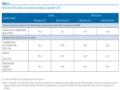
On the basis of the sequence obtained, a maximum likelihood tree (Figure) showed that the virus belongs to the genus Betacoronavirus, with closest relationships to bat coronaviruses HKU4 and HKU5. Viruses that share more than 90% sequence identity in the conserved replicase domain are considered to belong to the same species by the International Committee on Taxonomy of Viruses (ICTV). Our sequence comparisons suggested that the virus nucleic acid fragment identified is derived from a novel coronavirus that is distinct from all coronaviruses described to date.
-snip-
The origin for this novel virus is unknown. Epidemiological human and animal investigations in the region of origin are required to distinguish between an animal reservoir that either directly or indirectly transmits the virus occasionally to humans, and a previously unrecognised endemic infection of humans that causes severe outcomes in a few of those infected. Distinguishing between these possibilities will require wider application of more specific and sensitive molecular assays for coronaviruses, and greater awareness of the possible presence of coronaviruses in human acute severe respiratory illness. Extensive serological testing of potentially exposed human populations and contacts will be a key indicator of the extent of disease due to novel coronaviruses.
Complete document: http://www.eurosurveillance.org/ViewArticle.aspx?ArticleId=20290
Oseltamivir
Evidence suggests that some antiviral drugs, notably oseltamivir, can reduce the duration of viral replication and improve prospects of survival.
In suspected cases, oseltamivir should be prescribed as soon as possible (ideally, within 48 hours following symptom onset) to maximize its therapeutic benefits.[http://www.who.int/mediacentre/factsheets/avian_influenza/en/]
Ceftriaxone injection is used to treat certain infections caused by bacteria such as gonorrhea (a sexually transmitted disease), pelvic inflammatory disease (infection of the female reproductive organs that may cause infertility), meningitis (infection of the membranes that surround the brain and spinal cord), and infections of the lungs, ears, skin, urinary tract, blood, bones, joints, and abdomen. Ceftriaxone injection is also sometimes given before certain types of surgery to prevent infections that may develop after the operation. Ceftriaxone injection is in a class of medications called cephalosporin antibiotics. It works by killing bacteria. Antibiotics will not work for colds, flu, or other viral infections.
Azithromycin is used to treat certain infections caused by bacteria, such as bronchitis; pneumonia; sexually transmitted diseases (STD); and infections of the ears, lungs, skin, and throat. Azithromycin is in a class of medications called macrolide antibiotics. It works by stopping the growth of bacteria. Antibiotics will not work for colds, flu, or other viral infections. (editing is mine).
Excerpt:
Case history
On 14 September 2012, the United Kingdom Health Protection Agency (HPA) Imported Fever Service was notified of a case of unexplained severe respiratory illness in a London intensive care unit. The patient had recently transferred from Qatar and had a history of travel to Saudi Arabia.
He was a previously well 49 year-old man who developed a mild undiagnosed respiratory illness while visiting Saudi Arabia during August 2012, which fully resolved. He subsequently presented to a physician in Qatar on 3 September, with cough, myalgia and arthralgia, and was prescribed oral antibiotics. Five days later, he was admitted to a Qatari hospital with fever (38.4 °C) and hypoxia, with oxygen saturation of 91% on room air. A chest X-ray showed bilateral lower zone consolidation. He was treated with ceftriaxone, azithromycin and oseltamivir. After 48 hours, he required intubation and ventilation and was transferred by air ambulance to London. During transfer, he was clinically unstable, requiring manual ventilation.
On admission to intensive care in London, he remained severely hypoxic, achieving an arterial PaO2 of 6.5 kPA (normal range: 11–13 kPA) on 100% oxygen with optimised pressure ventilation, and required low-dose norepinephrine to maintain blood pressure. His white blood cell count was 9.1 x 10⁹/L (normal range: 4–11 x 109/L), C-reactive protein 350 mg/L (normal range: 0–10 mg/L) and creatinine 353 μmol/L (normal range: 53–97 μmol/L), with normal liver function and coagulation. He was treated with corticosteroids and broad-spectrum antibiotics, initially meropenem, clarithromycin and teicoplanin. Colistin and liposomal amphotericin B were subsequently added.
His condition deteriorated between 11 and 20 September, with progressive hypoxia....
-snip-

Detection of a novel coronavirus
We used real-time PCR on upper (nose and throat swabs) and lower respiratory tract samples (sputum and tracheal aspirates) to test for a range of coronaviruses: OC43, 229E, NL63 and SARS-CoV. We also used a block-based pan-coronavirus PCR with degenerate primers targeted to the conserved RNA-dependent RNA polymerase (RdRp Pol) gene that detects all coronaviruses known to infect humans and a range of animal coronaviruses [6].
The pan-coronavirus assay yielded a band of the correct size in lower respiratory tract samples, but the assays for OC43, 229E, NL63 and SARS-coronaviruses were negative. Sanger sequencing of the pan-coronavirus PCR product (a 251 base pair fragment encompassing nucleotides 104–354 of the NSP12 gene) yielded a sequence that on BLAST analysis gave genetic identity of 81% to bat coronavirus/133/2005 (GenBank accession number DQ648794.1) and 75% identity to porcine haemagglutinating encephalomyelitis virus strain VW572 (GenBank accession number DQ011855.1)
The sequence identified is available on the HPA website [7]. In response to this identification, a new set of real-time RT PCR assays were developed [8]. The results of these assays tested on novel coronavirus tissue culture material and clinical samples from this confirmed case are shown in Table 2.
Table 2. Real-time PCR results of coronavirus samples, September 2012
Click on Table below:
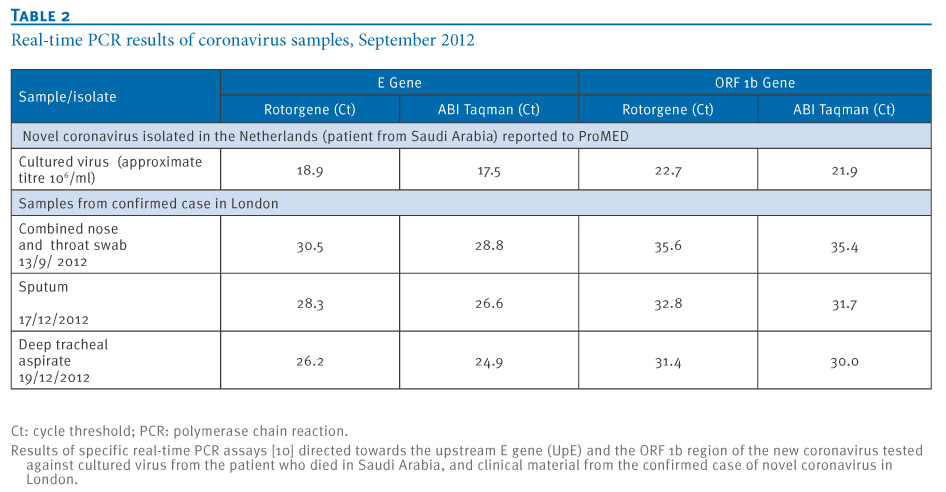
On the basis of the sequence obtained, a maximum likelihood tree (Figure) showed that the virus belongs to the genus Betacoronavirus, with closest relationships to bat coronaviruses HKU4 and HKU5. Viruses that share more than 90% sequence identity in the conserved replicase domain are considered to belong to the same species by the International Committee on Taxonomy of Viruses (ICTV). Our sequence comparisons suggested that the virus nucleic acid fragment identified is derived from a novel coronavirus that is distinct from all coronaviruses described to date.
-snip-
The origin for this novel virus is unknown. Epidemiological human and animal investigations in the region of origin are required to distinguish between an animal reservoir that either directly or indirectly transmits the virus occasionally to humans, and a previously unrecognised endemic infection of humans that causes severe outcomes in a few of those infected. Distinguishing between these possibilities will require wider application of more specific and sensitive molecular assays for coronaviruses, and greater awareness of the possible presence of coronaviruses in human acute severe respiratory illness. Extensive serological testing of potentially exposed human populations and contacts will be a key indicator of the extent of disease due to novel coronaviruses.
Complete document: http://www.eurosurveillance.org/ViewArticle.aspx?ArticleId=20290
Recombinomics: Michigan H3N2v Cases With PB1 E618D and H1N1pdm09 M Gene
October 4, 2012
The CDC has released a large series of H3N2v sequences from August, 2012 cases, increasing the number of July/August sets to 90. Included were two sets of sequences from two cases in Michigan collected on August 16. Sequences from one case, A/Michigan/20/2012, cover seven of the eight gene segments (all except NS), while the second set, A/Michigan/19/2012, from an adult (54M), covered PB1 and PA. The shared sequences were virtually identical suggesting all 8 gene segments match. Both PB1 sequences had E618D and were closely related to sequences from 2010 human cases, as was seen in recent swine sequences from June collections in Ohio (A/swine/Ohio/1/2012, A/swine/Ohio/6/2012, A/swine/Ohio/7/2012).
As seen in the Ohio swine sequences, the N2 was closely related to sequences from the first 10 cases in 2011 and were from a lineage found in H1N2 swine. Moreover, these sequences also had an H1N1pdm09 M gene as well as an H3 gene that was related to human H3N2v sequences from US cases (2009-2012).
The presence of PB1 E618D and H1N1pdm09 M genes in the Ohio swine sequences raised concerns of increased human adaptation, although prior to the release of the Michigan sequences, this combination had not been reported in humans. All 2012 cases had an H1N1pdm09 M gene, but none had PB1 E618D or the N2 lineage seen in early 2011 cases. Instead, all had an N2 lineage that circulated in H3N2v swine and was first seen in human H3N2v in sequences from the West Virginia day care center ((A/West Virginia/06/2011 and A/West Virginia/07/2011).
The presence of PB1 E618D in two cases in Michigan raises concerns of increased transmission. Michigan reported 5 cases in August and sequences from the first case, A/Michigan/14/2012, was similar to other 2012 H3N2v cases. However, Michigan has announced a sixth case which has been “under investigation” for several weeks (as noted in the past 3 Michigan flu updates for weeks 36-38). More information on this case and other cases “under investigation” would be useful.
The two cases with PB1 E618D and an N2 gene found in 2011 cases once again highlights the discordance between human and swine cases. The N2 gene found in the two 2012 Michigan cases are widespread in swine (including the 4 June cases in Ohio), yet all other reported human H3N2v cases in 2012 have the N2 lineage found in the West Virginia outbreak. Prior to the explosion of cases in July and August, swine with this N2 as well as H3 and MP which matches the human cases was limited to two examples (in North Carolina and Indiana).
The limited number of human cases with the N2 that is widespread in swine suggests that jumps from swine to human are relatively rare, but the two newly released sequences from Michigan raises concerns that the spread of this novel constellation may be increasing.
The CDC has released a large series of H3N2v sequences from August, 2012 cases, increasing the number of July/August sets to 90. Included were two sets of sequences from two cases in Michigan collected on August 16. Sequences from one case, A/Michigan/20/2012, cover seven of the eight gene segments (all except NS), while the second set, A/Michigan/19/2012, from an adult (54M), covered PB1 and PA. The shared sequences were virtually identical suggesting all 8 gene segments match. Both PB1 sequences had E618D and were closely related to sequences from 2010 human cases, as was seen in recent swine sequences from June collections in Ohio (A/swine/Ohio/1/2012, A/swine/Ohio/6/2012, A/swine/Ohio/7/2012).
As seen in the Ohio swine sequences, the N2 was closely related to sequences from the first 10 cases in 2011 and were from a lineage found in H1N2 swine. Moreover, these sequences also had an H1N1pdm09 M gene as well as an H3 gene that was related to human H3N2v sequences from US cases (2009-2012).
The presence of PB1 E618D and H1N1pdm09 M genes in the Ohio swine sequences raised concerns of increased human adaptation, although prior to the release of the Michigan sequences, this combination had not been reported in humans. All 2012 cases had an H1N1pdm09 M gene, but none had PB1 E618D or the N2 lineage seen in early 2011 cases. Instead, all had an N2 lineage that circulated in H3N2v swine and was first seen in human H3N2v in sequences from the West Virginia day care center ((A/West Virginia/06/2011 and A/West Virginia/07/2011).
The presence of PB1 E618D in two cases in Michigan raises concerns of increased transmission. Michigan reported 5 cases in August and sequences from the first case, A/Michigan/14/2012, was similar to other 2012 H3N2v cases. However, Michigan has announced a sixth case which has been “under investigation” for several weeks (as noted in the past 3 Michigan flu updates for weeks 36-38). More information on this case and other cases “under investigation” would be useful.
The two cases with PB1 E618D and an N2 gene found in 2011 cases once again highlights the discordance between human and swine cases. The N2 gene found in the two 2012 Michigan cases are widespread in swine (including the 4 June cases in Ohio), yet all other reported human H3N2v cases in 2012 have the N2 lineage found in the West Virginia outbreak. Prior to the explosion of cases in July and August, swine with this N2 as well as H3 and MP which matches the human cases was limited to two examples (in North Carolina and Indiana).
The limited number of human cases with the N2 that is widespread in swine suggests that jumps from swine to human are relatively rare, but the two newly released sequences from Michigan raises concerns that the spread of this novel constellation may be increasing.
ProMED: INFLUENZA (97): USA AND WORLDWIDE, CDC UPDATE
Excerpt:
[In summary: Worldwide influenza activity from 20 May to 22 Sep 2012 was elevated in the temperate Southern Hemisphere and tropical regions compared with their levels outside the usual influenza season.
In the United States, low levels of seasonal influenza activity were detected, and influenza A (H3N2) viruses were most commonly identified. Antigenic characterization of viral isolates from specimens submitted during the summer demonstrated that the majority of influenza A viruses are antigenically similar to the influenza vaccine strains contained in the current Northern Hemisphere 2012-13 vaccine available for us this season.
More than 300 cases of the influenza A (H3N2) variant virus were detected in 10 states but not elsewhere. The majority of these cases were associated with direct contact with swine.
The majority of recent influenza A viruses are well-matched to the influenza vaccine for this season. Annual influenza vaccination remains the best method for preventing influenza and its associated complications, but the 2012-13 seasonal influenza vaccine does not provide protection against the H3N2v virus. Although community transmission of this H3N2v has not been identified, the potential for this virus to develop the ability to transmit efficiently from person-to-person is of concern. Rapid and intensive investigation of each variant case is necessary to evaluate the spread of disease and the possibility of person-to-person transmission.
Interested readers should consult the original text via the source URL to obtain details of the literature cited. - Mod.CP
A HealthMap/ProMED-mail map can be accessed at: http://healthmap.org/r/1hiS.]
http://www.promedmail.org/direct.php?id=20121004.1324516
[In summary: Worldwide influenza activity from 20 May to 22 Sep 2012 was elevated in the temperate Southern Hemisphere and tropical regions compared with their levels outside the usual influenza season.
In the United States, low levels of seasonal influenza activity were detected, and influenza A (H3N2) viruses were most commonly identified. Antigenic characterization of viral isolates from specimens submitted during the summer demonstrated that the majority of influenza A viruses are antigenically similar to the influenza vaccine strains contained in the current Northern Hemisphere 2012-13 vaccine available for us this season.
More than 300 cases of the influenza A (H3N2) variant virus were detected in 10 states but not elsewhere. The majority of these cases were associated with direct contact with swine.
The majority of recent influenza A viruses are well-matched to the influenza vaccine for this season. Annual influenza vaccination remains the best method for preventing influenza and its associated complications, but the 2012-13 seasonal influenza vaccine does not provide protection against the H3N2v virus. Although community transmission of this H3N2v has not been identified, the potential for this virus to develop the ability to transmit efficiently from person-to-person is of concern. Rapid and intensive investigation of each variant case is necessary to evaluate the spread of disease and the possibility of person-to-person transmission.
Interested readers should consult the original text via the source URL to obtain details of the literature cited. - Mod.CP
A HealthMap/ProMED-mail map can be accessed at: http://healthmap.org/r/1hiS.]
http://www.promedmail.org/direct.php?id=20121004.1324516
Subscribe to:
Posts (Atom)